Cabo Verde: Islands of Culture and Resilience
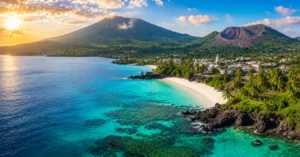
Cabo Verde, also known as Cape Verde, is an archipelago of 10 islands sitting in the Atlantic Ocean, about 570 kilometers off the west coast of Senegal. The islands are volcanic in origin, and the variation between them is remarkable: some are mountainous and green, others flat and desert-dry. The largest, Santiago, contains the capital Praia. The most popular with tourists are Sal and Boa Vista, known for their beaches, and Santo Antao, known for its dramatic mountain scenery and hiking.
Cape Verde was uninhabited when Portuguese sailors arrived in the 15th century. They settled the islands and made them a significant hub in the Atlantic trade routes, including the transatlantic slave trade. The resulting Creole culture, which blends Portuguese, West African, and other influences, has produced one of the most distinctive identities in the African world.
Why Visit Cabo Verde
The islands divide naturally into two groups with very different appeals. The eastern islands, particularly Sal and Boa Vista, are flat and arid, with long white sand beaches, turquoise water, and conditions that make them among the best places in the world for windsurfing, kitesurfing, and surfing.
Santa Maria on Sal has a well-developed beach resort scene. Boa Vista has vast undeveloped beaches and nesting loggerhead sea turtles between June and October.
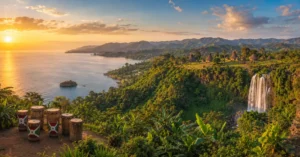
The western islands are dramatically different. Santo Antao is a rugged green island of deep valleys, volcanic peaks, and terraced agriculture. Hiking here is among the best in Africa, with trails through cloud forest, along ancient irrigation channels, and past communities that feel genuinely isolated from the modern world.
The town of Mindelo on the neighboring island of Sao Vicente is the cultural capital of the archipelago, a lively port town with a strong music scene and some of the most beautiful colonial architecture in the islands.
Santiago, the largest island, has the capital Praia and the UNESCO-listed Cidade Velha, the oldest European colonial settlement in the tropics, founded in 1462. The fort, cathedral ruins, and pillory stone of Cidade Velha are remnants of a city that was one of the most important in the early Portuguese empire.
Morna: The Music of Cape Verde
Cape Verde is famous worldwide for morna, a melancholic genre of music that has been recognized by UNESCO as Intangible Cultural Heritage. The music expresses saudade, a Portuguese word for a deep emotional state of nostalgic longing, and it resonates with a power that is completely out of proportion to the tiny country that produced it.
Cesaria Evora, the “Barefoot Diva,” brought morna to global audiences in the 1990s and remains the country’s most celebrated cultural export. Live music is easy to find in Mindelo and Praia, and the experience of hearing morna performed in a small club on the island where it was born is deeply affecting.
Creole cuisine in Cape Verde is centered on cachupa, a slow-cooked stew of corn, beans, and various meats, that serves as both comfort food and cultural symbol. Fresh grilled fish and seafood, caught in the rich Atlantic waters around the islands, is excellent throughout the archipelago.
Practical Travel Tips for Cabo Verde
Citizens of most countries can obtain a visa on arrival or through an online pre-registration process. The official language is Portuguese, with Cape Verdean Creole spoken in everyday life. The Cape Verdean escudo is the currency. The islands are safe and relatively well-organized by regional standards. Direct flights are available from several European cities and from West Africa. The best time to visit for beaches is October to June. The sailing and windsurfing conditions are best from November to June.