
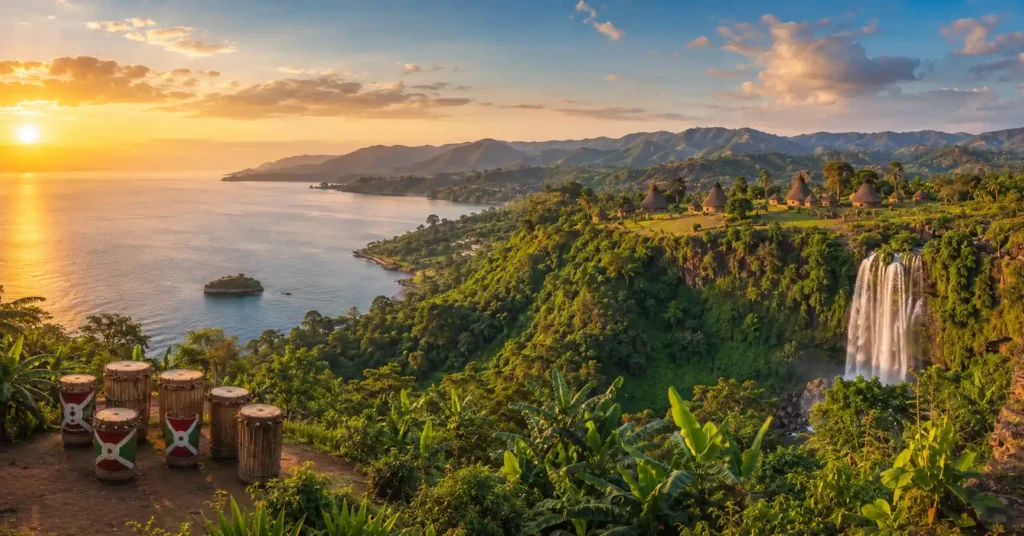
Burundi is one of East Africa’s most underrated and authentic travel destinations. If you are looking for the best places to visit in Burundi, you will find a country of stunning lake shores, lush rainforests, dramatic waterfalls and living cultural traditions that few outsiders have ever witnessed. From the lakeside capital of Bujumbura to the sacred Gishora Drum Sanctuary, Burundi offers genuine discovery for travelers who want something well off the beaten path. This 2026 guide covers the top destinations, practical tips and a full itinerary to help you plan your trip.
Table of Contents
Why Visit Burundi?
1. Untouched Tourism Appeal
Burundi receives very few international tourists, which means the sites are uncrowded, the experiences are authentic and the connections you make with local people feel genuinely meaningful. You will not find tourist traps or commercialized culture here. Everything feels real.
2. Rich Cultural Traditions
Burundi has one of the most distinctive cultural identities in Africa. The Royal Drummers of Burundi are recognized by UNESCO as an Intangible Cultural Heritage of Humanity. Traditional drumming ceremonies, dance and storytelling are living practices, not museum exhibits. Experiencing this culture firsthand is one of the most memorable things a traveler can do in East Africa.
3. Scenic Natural Landscapes
Burundi is a small but visually stunning country. Lake Tanganyika offers some of the most beautiful freshwater scenery on the continent. The highland interior is covered in rolling green hills, forests and river valleys. Rainforests, waterfalls and wildlife parks round out a natural landscape that surprises most visitors.
7 Best Places to Visit in Burundi
1. Bujumbura
Bujumbura is Burundi’s largest city and sits on the northeastern shore of Lake Tanganyika. The city has a relaxed, tropical feel with palm-lined streets, waterfront bars and a busy central market. The Bujumbura Central Market is a great place to experience everyday local life, with vendors selling fresh produce, textiles and crafts.
The beaches along Lake Tanganyika in and around Bujumbura are the main leisure attraction. Plage des Cocotiers and several private beach clubs offer swimming, cold drinks and beautiful lake views. The city also has a growing restaurant scene and a lively nightlife culture that reflects Burundi’s love of music.
Key highlights of Bujumbura:
- Lake Tanganyika beaches for swimming and relaxing
- Bujumbura Central Market for local food and crafts
- Waterfront restaurants and beach bars
- Lively local music and nightlife scene
- Starting point for day trips to national parks and cultural sites
2. Lake Tanganyika
Lake Tanganyika is one of the most extraordinary bodies of water on Earth. It is the second deepest lake in the world, reaching depths of nearly 1,500 meters, and holds about 17 percent of the world’s unfrozen fresh water. The lake stretches along Burundi’s entire western border and is the heart of daily life for communities all along its shores.
The water is exceptionally clear and warm, making it perfect for swimming, snorkeling and kayaking. The sunsets over Lake Tanganyika are among the most beautiful in Africa, with the wide, calm water turning gold and orange as the sun drops behind the distant hills of the Democratic Republic of Congo on the opposite shore.
Key highlights of Lake Tanganyika:
- Swimming and snorkeling in clear, warm freshwater
- Kayaking along the scenic shoreline
- Spectacular sunsets over the water
- Fishing villages and local boat culture
- Some of the most unique freshwater fish species in the world
3. Rusizi National Park
Rusizi National Park sits just north of Bujumbura at the mouth of the Rusizi River where it flows into Lake Tanganyika. The park is one of the best places in Burundi to see wildlife in a natural setting. The Rusizi River and its surrounding wetlands are home to a large population of hippos, Nile crocodiles and an impressive variety of waterbirds including herons, egrets, kingfishers and African fish eagles.
Boat tours along the Rusizi River are the best way to experience the park. Drifting quietly past hippos resting in the water and crocodiles sunning on the banks is a genuinely exciting wildlife experience that is surprisingly affordable and accessible.
Key highlights of Rusizi National Park:
- Boat tours on the Rusizi River for hippo and crocodile sightings
- Excellent birdwatching with many waterbird species
- Easy half-day or full-day trip from Bujumbura
- Affordable entry and tour costs
- Beautiful wetland scenery at the meeting of river and lake
4. Kibira National Park
Kibira National Park in northwestern Burundi is the largest protected rainforest in the country and one of the most biodiverse areas in East Africa. The park covers over 400 square kilometers of montane rainforest and is home to chimpanzees, colobus monkeys, baboons, forest elephants and an extraordinary range of bird species.
Hiking through Kibira’s dense forest, with the sounds of chimpanzees calling overhead and morning mist rising through the trees, is a truly special experience. Guided chimp trekking is available and offers close encounters with one of our closest relatives in the wild.
Key highlights of Kibira National Park:
- Chimpanzee trekking through montane rainforest
- Colobus monkey and baboon sightings
- Exceptional birdwatching with many forest species
- Scenic hiking trails through dense forest
- One of the most biodiverse areas in Burundi
5. Gishora Drum Sanctuary
The Gishora Drum Sanctuary near Gitega is one of the most culturally significant sites in Burundi and one of the most extraordinary cultural experiences in all of East Africa. The Royal Drummers of Burundi have performed here for centuries and their tradition is recognized by UNESCO as an Intangible Cultural Heritage of Humanity.
Performances at Gishora involve large groups of drummers playing giant royal drums called karyenda in complex, powerful rhythms while others dance and chant around them. The energy and spectacle of a live performance is something that stays with visitors long after they leave. This is not a staged tourist show. It is a living, sacred cultural tradition.
Key highlights of Gishora Drum Sanctuary:
- Live performances by the UNESCO-recognized Royal Drummers of Burundi
- One of the most unique cultural experiences in East Africa
- Located near Gitega, Burundi’s official capital
- Deeply meaningful for understanding Burundian identity and history
- Photography opportunities during performances
6. Karera Waterfalls
The Karera Waterfalls in southeastern Burundi are among the most beautiful natural attractions in the country. The falls cascade through a series of drops surrounded by dense forest and green vegetation, creating a cool, peaceful environment that feels completely removed from the outside world. The site includes four main falls of varying heights and is easy to explore on foot with local guides.
Key highlights of Karera Waterfalls:
- Four beautiful cascading falls surrounded by forest
- Short hiking trails between the different falls
- Cool, shaded environment ideal for hot days
- Good photography opportunities
- Local guides available at the site entrance
7. Source of the Nile
Burundi claims the most southerly source of the Nile River, located near the town of Rutovu in the Bururi Province. A small pyramid monument marks the spot where a tiny spring feeds into a stream that eventually flows northward, joining the Kagera River system and ultimately reaching the Nile. For history and geography enthusiasts, standing at this symbolic location is a quietly powerful experience.
Key highlights of the Source of the Nile in Burundi:
- Monument marking the claimed southernmost source of the Nile
- Scenic green highland landscape
- Symbolic historical and geographical significance
- Easy to combine with a visit to Karera Waterfalls
- A unique story to tell after your trip
Hidden Gems in Burundi
1. Saga Beach – Relaxed Lakeside Escape
Saga Beach is a quiet stretch of Lake Tanganyika shoreline south of Bujumbura that offers a more peaceful alternative to the city beaches. It is popular with locals on weekends but rarely visited by international travelers. The calm water, white sand and lack of crowds make it a perfect spot to spend a slow afternoon.
2. Livingstone-Stanley Monument – Explorer History
Near Mugere, a small monument commemorates the area where explorer Henry Morton Stanley is believed to have traveled in search of David Livingstone in the 19th century. It is a modest but historically interesting site for travelers interested in the story of European exploration in Central Africa.
Best Time to Visit Burundi
1. Dry Seasons: June to September and December to February
Burundi has two dry seasons and both are excellent for travel. The long dry season from June to September offers the best road conditions, the most comfortable temperatures for hiking and the easiest wildlife viewing. The shorter dry season from December to February is also good for travel and coincides with lower accommodation prices.
2. Rainy Season Considerations
The main rainy seasons run from March to May and October to November. Heavy rain can make some roads difficult, particularly in rural areas. However, the landscape is at its most lush and green, Karera Waterfalls are at their most impressive and birdwatching is excellent with many species active.
3. Wildlife and Cultural Timing
- For hippo and crocodile viewing at Rusizi: dry season from June to September
- For chimp trekking at Kibira: June to September for drier forest paths
- For Gishora drumming performances: available year-round with advance notice
- For Karera Waterfalls at peak flow: March to May during the rains
Travel Tips for Visiting Burundi
1. Visa Requirements
Most nationalities can obtain a visa on arrival at Bujumbura International Airport. The fee is typically $90 USD payable in cash. You will need a valid passport with at least six months remaining, a return flight booking and proof of accommodation. Some nationalities may need to apply through a Burundian embassy in advance. Always check the latest visa requirements before traveling.
2. Is Burundi Safe for Tourists?
Burundi has experienced political instability in the past and some Western governments maintain elevated travel advisories for the country. The main tourist areas including Bujumbura, Lake Tanganyika, Rusizi National Park and Gishora are generally considered safe for visitors. The situation has improved in recent years but conditions can change.
Safety tips:
- Check your government’s official travel advisory before booking and before departure
- Register your trip with your country’s embassy in Bujumbura
- Avoid political gatherings and demonstrations
- Use reputable local guides and tour operators
- Avoid travel after dark outside of Bujumbura city center
3. Getting Around Burundi
- Taxis are available in Bujumbura and are the safest option for city travel
- Shared minibuses called taxis-bus connect major towns at very low cost
- Hiring a private driver is the most comfortable option for multi-day trips
- Roads in rural areas can be rough so a 4×4 vehicle is recommended outside main cities
- Boat transport is available along Lake Tanganyika for coastal destinations
4. Currency and Costs
The official currency is the Burundian franc (BIF). Cash is the primary payment method across the country. ATMs are available in Bujumbura but unreliable outside the capital. US dollars are widely accepted at hotels and tour operators.
- Budget travelers can manage on $40 to $60 USD per day
- Mid-range travelers should budget $70 to $100 USD per day
- Accommodation in guesthouses costs $20 to $50 USD per night
- Local meals cost between $2 and $8 USD
- Carry sufficient US dollars or local currency when traveling outside Bujumbura
Suggested 4 to 6 Day Burundi Itinerary
Sample Day-by-Day Breakdown
| Day | Destination | Main Activities |
| Day 1 to 2 | Bujumbura and Lake Tanganyika | City market, beach clubs, lake swimming, sunset views, waterfront dining |
| Day 3 | Rusizi National Park | Morning boat tour, hippo and crocodile sightings, birdwatching |
| Day 4 | Gishora Drum Sanctuary | Drive to Gitega, live drumming performance, cultural exploration |
| Day 5 | Karera Waterfalls and Source of the Nile | Forest hiking, waterfall photography, Nile source monument visit |
| Day 6 | Return to Bujumbura | Final market visit, lake walk, departure |
Itinerary Tips:
- Book the Gishora drumming performance in advance through a local tour operator
- Hire a private driver for the Gitega and Karera Waterfalls leg as public transport is slow
- Combine Karera Waterfalls and the Source of the Nile on the same day as they are in a similar area
- Allow a full morning for Rusizi National Park boat tours for the best wildlife experience
What is Burundi Famous For?
1. Traditional Drumming
Burundi is world-famous for the Royal Drummers, whose UNESCO-recognized performances are considered one of the most powerful cultural experiences in Africa. Traditional drumming is central to Burundian identity and history.
2. Lake Tanganyika
Lake Tanganyika is one of the world’s great lakes and Burundi’s most celebrated natural attraction. Its extraordinary depth, crystal clear water and beautiful sunsets make it a destination in its own right.
3. Scenic Landscapes
Burundi is known for its green, hilly interior, dramatic waterfalls and lush rainforests. The country is sometimes called the Heart of Africa for both its central location and its natural beauty.
FAQs About Visiting Burundi
-
Is Burundi Worth Visiting?
Yes, for adventurous and culturally curious travelers. Burundi offers authentic experiences, extraordinary natural beauty and a living cultural heritage that is unlike anything else in East Africa. The low tourist numbers make every experience feel genuine and personal.
-
Is Burundi Safe for Tourists?
The main tourist areas are generally safe but travelers should check their government’s official travel advisory before booking. Avoid political gatherings, travel with a reputable local guide and register with your embassy on arrival.
-
What Language is Spoken in Burundi?
Kirundi and French are the official languages of Burundi. Kirundi is the native language spoken by virtually the entire population. French is used in government and education. Swahili is also widely spoken, particularly in Bujumbura and along the Lake Tanganyika corridor. Learning a few Kirundi greetings will be warmly appreciated by locals.
-
Is Burundi Expensive to Travel?
Burundi is one of the more affordable destinations in East Africa. Budget travelers can manage comfortably on $40 to $60 USD per day. Local food, transport and guesthouses are inexpensive. The main costs are guided safari and cultural activities, which are still very affordable compared to neighboring countries.
Map of the Burundi
Final Thoughts on Visiting Burundi
Burundi is a destination for travelers who want something truly different. The drumming is unlike anything else in Africa, the lake is one of the most beautiful in the world and the country’s untouched quality makes every moment feel like genuine discovery. Go with an open mind, a good local guide and realistic expectations. Burundi will surprise you in the best possible way.