India is too big to see in one trip, so the best way to choose among the places to visit in India is to pick a region first and a few stops inside it. This guide covers 15 places, with how long to stay, when to go, and what travelers from the U.S., UK, Canada, Australia and Europe should know about visas, safety and permits right now.
Quick Answer: Where to Go in India
- First trip and history: Delhi, Agra and Jaipur (the Golden Triangle).
- Spiritual: Varanasi, Rishikesh and Amritsar.
- Beaches and backwaters: Goa and Kerala.
- Mountains: Leh in Ladakh and Darjeeling.
- Wildlife: Kaziranga in Assam and the tiger reserves of Madhya Pradesh.
- Ruins and city culture: Hampi, Udaipur and Mumbai.
- Best season for most of the country: Winter. India’s Ministry of Tourism says December to February brings pleasant conditions across most of India. The south, the Himalaya and the northeast follow their own calendars (see the table further down).
Table of Contents
How to Choose Where to Go in India
Distances in India are long, and trains and flights eat into your days. The smartest way to plan is to focus on one or two regions per trip and leave the rest for next time. For a sense of how much history is packed into the country, UNESCO lists 45 World Heritage properties in India.
| Your trip | A good starting plan |
|---|---|
| First visit, about one week | Delhi, Agra and Jaipur |
| Two weeks, culture focus | Golden Triangle, then Udaipur and Varanasi |
| Beaches and food | Goa, then Kerala |
| Mountains | Leh in Ladakh |
| Wildlife | Madhya Pradesh tiger reserves, or Kaziranga in season |
The “Suggested time” lines below are our own rough planning suggestions, not official figures. Season and opening details that come from an official source are linked to it.
1.Delhi: Best for History and Architecture
Most first trips begin here, and Delhi is the starting point of the Golden Triangle, the circuit that links Delhi, Agra and Jaipur. Delhi is really two cities. Old Delhi has the Red Fort and Jama Masjid. New Delhi has India Gate, the Jantar Mantar observatory and wider, calmer streets.
Three Delhi sites are on UNESCO’s World Heritage List: Humayun’s Tomb, the Qutb Minar and its monuments, and the Red Fort Complex. If you have time left over, the Lotus Temple and the evening cafes of Hauz Khas Village make easy additions.
Suggested time: Three days.
Best season: Winter, when days are mild. Summer heat on the northern plains is intense.
Planning tip: Old Delhi is hectic, with heavy traffic and plenty of touts. Sleep in a quieter part of the city and visit the old quarter by day.
2.Agra: Best for the Taj Mahal and Mughal Landmarks
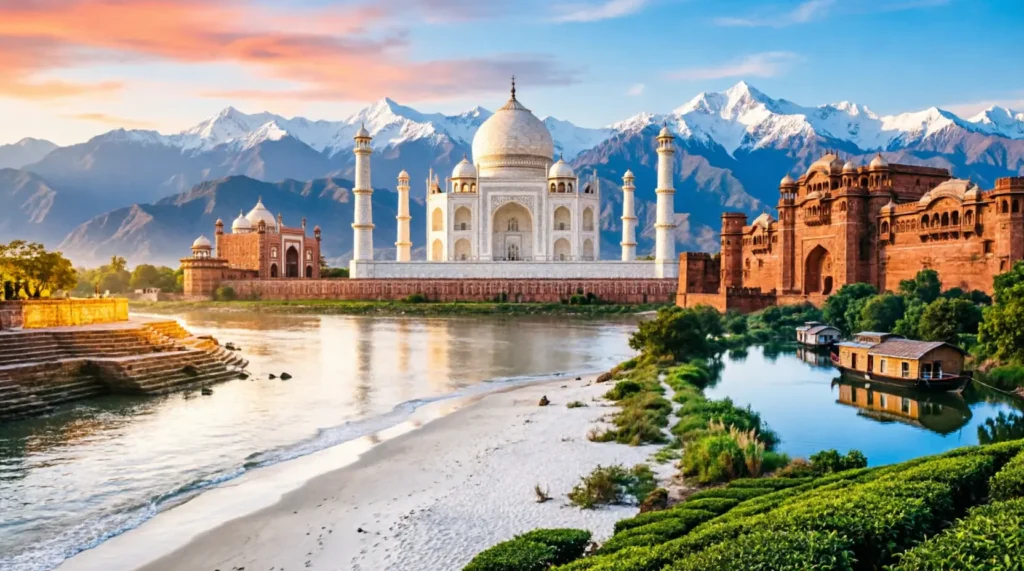
The Taj Mahal is the reason to come, and UNESCO lists it alongside Agra Fort and Fatehpur Sikri. Agra Fort is the natural second stop. Fatehpur Sikri, the former Mughal capital under Akbar, is a short drive away.
Plan around the official schedule. The Taj Mahal’s own visiting hours page says it opens 30 minutes before sunrise and closes 30 minutes before sunset, and that it is closed on Fridays for general viewing. That makes sunrise entry the easy way to beat the crowds, and it means Friday is the day to visit Agra Fort instead.
Suggested time: Two to three days.
Best season: Winter. Keep a spare morning in case plans shift.
Planning tip: Check the opening days again before you build your schedule, since the Friday closure shapes the whole trip.
3.Jaipur: Best for Forts and Bazaars
Jaipur is known as the Pink City, a name the Rajasthan Tourism site uses for the city. The main stops are the City Palace, Hawa Mahal and the hilltop forts of Amer and Nahargarh. Johari Bazaar and Bapu Bazaar are the places to look for block-printed cotton and leather jutti shoes.
UNESCO has inscribed Jaipur City (2019) and the Jantar Mantar observatory (2010), and its Hill Forts of Rajasthan listing covers forts across the state.
Suggested time: Two to three days.
Best season: Winter. Summer days are very hot for fort climbs.
Planning tip: Do the forts in the morning and the bazaars in the late afternoon, when the light and the temperatures are easier.
4.Udaipur: Best for Lakes and Palaces
Udaipur is built around lakes. A boat ride on Lake Pichola is touristy, but it is the best way to see the City Palace and the floating palaces from the water. Other stops include the Sajjan Garh Monsoon Palace above Fateh Sagar Lake, the Jagdish Temple, and Bagore-ki-Haveli, which hosts traditional Rajasthani dance in the early evening.
The city is also a popular wedding destination, so do not be surprised if a groom’s procession blocks a street.
Suggested time: Three days.
Best season: Winter, like the rest of Rajasthan.
Planning tip: Leave time to walk the old lanes around the lakeside instead of racing between palaces.
5.Varanasi: Best for Spirituality
Varanasi is one of India’s most sacred cities. Its riverside ghats on the Ganges draw pilgrims who bathe, perform rituals and cremate the dead. The Ganga aarti, a lamp ceremony held at dusk, is the best-known evening sight. Many visitors watch the funeral rites from a distance at Manikarnika Ghat. Keep your distance, stay quiet and ask before taking any photos.
Sarnath, where the Buddha preached his first sermon, is a short drive outside the city. UNESCO added the Ancient Buddhist Site of Sarnath to the World Heritage List in 2026.
Suggested time: Two days.
Best season: The cooler months after the monsoon has ended.
Planning tip: Eat in the old lanes, where kachoris and chaat are local staples, and walk the ghats at dawn when the light is best.
6.Amritsar: Best for the Golden Temple
The Golden Temple (shri Harmandir Sahib) is the central shrine of Sikhism. Visitors of every background are welcome, and the temple’s community kitchen serves free meals, called langar. Cover your head, remove your shoes, and go early or late to avoid the longest queues.
One accuracy note: the Golden Temple is not a UNESCO World Heritage Site. It appears only on India’s Tentative List as Sri Harimandir Sahib, submitted in 2004.
The border crossing at Attari and Wagah is nearby. The U.S. State Department says it is the only official crossing for non-citizens, and it lists the India-Pakistan border area at Level 4, “Do not travel,” due to the potential for armed conflict. The UK advises against all travel within 10 km of the border, and Canada says the same but excludes the Wagah crossing. Australia lists the crossing itself as “reconsider your need to travel.” If a border visit is on your list, read your own government’s advice first (links in the safety section below).
Suggested time: One to two days.
Best season: Winter, when the days are mild.
Planning tip: The cooler hours of early morning and late evening are easier on the marble floors and the crowds.
7.Rishikesh: Best for Yoga and River Rafting
Rishikesh sits on the banks of the Ganges in Uttarakhand, and it is both a yoga town and the main rafting base in northern India. Rafting generally pauses during the monsoon, when the river runs high, and resumes once water levels drop. Exact dates depend on river conditions and local rules, so confirm with your operator.
Choose a licensed operator. The State Department warns that tourism safety inspections are rare in India and that staff may not be trained or certified. It also places Rishikesh in the highest earthquake-risk category (5 on a 5 point scale) in its description of northern India.
Suggested time: Two to three days.
Best season: Outside the monsoon, when the river is open for rafting.
Planning tip: Ask any operator about its safety gear and guide training before you pay.
8.Leh, Ladakh: Best for Mountains
Leh is the usual base for Ladakh. Shanti Stupa, Leh Palace and the monastery at Thiksey Gompa are the main sights nearby. Adventure options include multi-day treks in the Markha and Nubra valleys and the drive over the Khardung La pass.
On safety, the State Department’s Level 4 advisory for Jammu and Kashmir specifically excludes Leh and eastern Ladakh. Some border areas still require permits, and the e-Visa is not valid for protected or restricted areas, so use a licensed agent for anything off the main routes.
Suggested time: Five days or more.
Best season: Summer, when the high passes are open. Heavy winter snow closes them, and opening dates change from year to year, so check current road status before you book a drive.
Planning tip: Take the first day slowly while you adjust to the altitude.
9.Mumbai: Best for City Energy
Mumbai is a huge, busy port city and a good counterweight to the heritage circuits. South Mumbai has the art quarter of Kala Ghoda, restaurants and shopping in Colaba, and the Raj-era architecture around Chhatrapati Shivaji Terminus. Bandra, further north, is where you go for old churches, restaurants and nightlife.
UNESCO lists three Mumbai-area properties: Chhatrapati Shivaji Terminus, the Victorian Gothic and Art Deco Ensembles, and the Elephanta Caves.
Suggested time: Two to three days. Best season: Winter. Heavy monsoon rain makes sightseeing harder. Planning tip: The State Department warns of strong currents and drownings off Mumbai, Goa and Puri, so skip ocean swimming, especially in the monsoon. Canada also asks travelers to exercise a high degree of caution in and around Mumbai.
10.Goa: Best for Beaches
Goa is India’s classic beach holiday, shaped by Portuguese colonial history. You can see that heritage in the ruined basilicas of Old Goa, which UNESCO lists as the Churches and Convents of Goa.
Pick your coast before you book. North Goa is livelier, with parties, night markets and surf schools. South Goa is quieter, with calmer beaches and more natural scenery.
Suggested time: Three days at minimum, and a week is better.
Best season: Winter, with pleasant days and cooler nights. The monsoon is quieter and greener, but expect some seasonal closures.
Planning tip: The State Department’s swimming warning covers Goa, so follow posted beach warnings. It also says trained lifeguards are rare on Indian beaches.
11.Hampi: Best for Ruins
Hampi is a field of temples and royal ruins among boulders. Karnataka Tourism describes it as the former capital of the Vijayanagara Empire, and UNESCO lists the Group of Monuments at Hampi. For a side trip, add the cave temples at Badami and the temples at Aihole, plus UNESCO-listed Pattadakal.
Suggested time: Two to three days.
Best season: October to February. Karnataka Tourism calls winter the best season to explore Hampi.
Planning tip: Start sightseeing at sunrise. Much of the walking is on rock, with little shade.
12.Kerala: Best for Backwaters
Kerala is a lush coastal state with beaches, backwaters, wildlife and a rich food culture. Alappuzha (Alleppey) is the gateway to houseboat trips on the backwaters. Kovalam and Varkala are beach options. Inland, Munnar, Wayanad and Thekkady are hill stations with tea, coffee and spice plantations, and Periyar Tiger Reserve is the main wildlife stop.
UNESCO lists the Western Ghats, the mountain range that runs along Kerala’s eastern edge, as a natural World Heritage Site.
Suggested time: About 10 days for a classic itinerary.
Best season: November to February, according to Kerala Tourism, which also names October to February as the best window for houseboat cruises. It lists June to August as the monsoon.
Planning tip: Decide between a day cruise and an overnight houseboat before you book, since prices and comfort vary widely.
13.Darjeeling: Best for Tea and Toy Trains
Darjeeling is a former British summer retreat in the Himalayan foothills, known for views of Kanchenjunga, tea gardens and silver fir forests. The Darjeeling Himalayan Railway, the narrow gauge toy train, is part of UNESCO’s Mountain Railways of India listing. Most visitors ride the short steam leg between Darjeeling and Ghum.
Other options include the Himalayan Mountaineering Institute, the Japanese Peace Pagoda and trekking in Singalila National Park.
Suggested time: Three days.
Best season: Spring and autumn, when skies are clearer. Winter is cold, and monsoon cloud can hide the mountain views.
Planning tip: Day trips to nearby hill stations such as Kalimpong, Kurseong and Mirik are easy by shared 4WD.
14.Kaziranga, Assam: Best for Rhinos
Kaziranga is a UNESCO natural World Heritage Site in Assam. The Assam government’s Kaziranga page says the park protects the world’s largest population of one-horned rhinoceroses, along with tigers, elephants, Asiatic wild buffalo and hundreds of bird species.
Governments differ on Assam, so read yours before you book. The U.S. State Department rates the Northeastern states Level 3, “Reconsider travel,” because of occasional violence by insurgent groups in parts of the region, though it also says there have been no recent reports of violence in Assam. Canada advises avoiding non-essential travel to Assam, and Australia says to reconsider your need to travel to Assam, except Guwahati.
Suggested time: Two days.
Best season: The Assam government says the park is open from November to April. Confirm opening dates for the current season, since monsoon flooding can change them.
Planning tip: Book safaris through a licensed operator, as the State Department advises for wildlife excursions.
15.Madhya Pradesh: Best for Tiger Safaris
Madhya Pradesh is home to some of India’s best-known tiger reserves, including Kanha, Bandhavgarh, Pench and Panna, so you can choose by region and by how far you are willing to drive.
Beyond the parks, the state has three UNESCO sites: Khajuraho, the Buddhist monuments at Sanchi and the Rock Shelters of Bhimbetka.
The State Department says U.S. government employees need approval to travel to the eastern part of Madhya Pradesh, so check its map before you choose a reserve.
Suggested time: Two to three days for a safari stay.
Best season: The state’s forest department says Bandhavgarh’s core zone safaris run from October 1 to the end of June and stay closed during the monsoon. It names March to June as the hot, dry stretch with the best chances of spotting animals. Other reserves keep their own dates, so check each one.
Planning tip: Safaris in popular reserves are booked online and fill up early. Reserve your slots before you lock in flights.
Places That Need Extra Planning: Kashmir, the Northeast and the Islands
A few famous places need more than a good itinerary. They need a permit, a current advisory check, or both.
Kashmir Valley. The U.S., UK, Canada and Australia all advise against travel to the Union Territory of Jammu and Kashmir, and none of them applies that warning to Leh and Ladakh. The State Department says violence is sporadic and happens in tourist spots such as Srinagar, Gulmarg and Pahalgam. That is why Kashmir is not one of our 15 picks.
The Northeast. The State Department rates the Northeastern states Level 3 and Manipur Level 4. The UK advises against all but essential travel to Manipur. Canada advises avoiding non-essential travel to Assam and Manipur, and Australia says to reconsider travel to Assam (except Guwahati), Nagaland and Manipur. Meghalaya is known for its waterfalls, caves and living root bridges, and a car and driver is the practical way to cover it. Foreigners need Restricted Area Permits for parts of Arunachal Pradesh, Sikkim, Mizoram, Nagaland and Manipur, according to the State Department.
The Andaman Islands. The Andaman and Nicobar Islands require a Restricted Area Permit. The State Department also reports fatal crocodile attacks there and says travel to North Sentinel Island is forbidden by the Indian government.
Best Time to Visit India by Region
India has no single best season. Use this table to match the month to the place. Every row comes from an official source.
| Region | Best time | Source |
|---|---|---|
| Most of India (north plains, Rajasthan, central India) | December to February: pleasant conditions | Ministry of Tourism, Incredible India |
| Kerala | November to February, with houseboat cruises best from October to February | Kerala Tourism |
| Hampi | October to February | Karnataka Tourism |
| Kaziranga | Park open November to April | Government of Assam |
| Bandhavgarh (Madhya Pradesh) | Core zone safaris October 1 to end of June, with March to June best for sightings | MP Forest Department |
For Leh and Ladakh, Darjeeling, Goa, Mumbai and Varanasi, the seasonal advice above is general guidance. Check the relevant state tourism board for exact dates before you book.
Visas, Safety and Entry Rules for US, UK, EU, Canadian and Australian Travelers
This is the section most guides skip, and it is the one most likely to change. Check every item against the official source before you book.
Visa and e-Visa
Most Western travelers need a visa to enter India, and most use the e-Tourist Visa, which comes in 30-day, one-year and five-year versions. The official Indian visa portal lists more than 175 eligible nationalities, including the U.S., UK, Canada, Australia, Germany, France and Ireland. Apply only on that portal. The Indian government says no agent is needed, and it warns about look-alike sites that charge extra.
Fees depend on your passport. The government’s country-wise fee schedule, dated September 8, 2026, lists these amounts:
| Passport | 30 days, April to June | 30 days, July to March | One year | Five years |
|---|---|---|---|---|
| United States | $10 | $25 | $40 | $160 |
| United Kingdom | $10 | $25 | $40 | $484 |
| Canada | $10 | $25 | $40 | $200 |
| Australia | $10 | $25 | $40 | $200 |
| Germany, France, Italy, Spain, Netherlands, Ireland, Sweden, Switzerland, New Zealand | $10 | $25 | $40 | $200 |
The schedule says a 3% bank charge is added to the e-Visa fee. Other nationalities have their own rows in the same document, and some third-party sites list different figures, so rely on the government source.
Other rules from the portal and from government advice:
- Apply at least four days before arrival.
- Your passport needs at least six months of validity when you apply.
- The e-Visa works only at designated international airports and seaports. Australia’s advice warns that not all international airports allow entry on an e-Visa, so check your arrival airport.
- The e-Visa is not valid for protected, restricted or cantonment areas.
- Complete the online e-Arrival card within 72 hours before you arrive.
Safety by region: what each government says
No major government tells you to avoid India as a whole. They ask for caution overall, and they agree on the same hot spots: Jammu and Kashmir, the Pakistan border, and parts of the Northeast. Here is how they compare.
| Government | Overall advice | Advises against all travel | Advises against non-essential travel or says reconsider |
|---|---|---|---|
| U.S. State Department | Level 2, “Exercise increased caution” (issued June 16, 2025) | Level 4: Jammu and Kashmir (except Leh and eastern Ladakh), the India-Pakistan border area, parts of Central and East India affected by Maoist violence, and Manipur | Level 3: the Northeastern states |
| UK FCDO (updated July 9, 2026) | Regional warnings only | Within 10 km of the India-Pakistan border; Jammu and Kashmir, except air travel to and within the city of Jammu | Manipur (all but essential travel) |
| Canada | High degree of caution throughout the country | Jammu and Kashmir; within 10 km of the Pakistan border (Wagah crossing excluded) | Assam and Manipur (non-essential travel); high caution in and around Bengaluru, Chandigarh and Mumbai |
| Australia Smartraveller | High degree of caution | Jammu and Kashmir; the India-Pakistan border, except the Atari-Wagah crossing | Reconsider travel to the Atari-Wagah crossing, Assam (except Guwahati), Nagaland, Manipur and Chhattisgarh with nearby border areas |
The U.S. advisory also says the U.S. government advises against women traveling alone in India. It recommends hiring cars from reliable providers and sticking to well-known venues in the evening. The UK FCDO warns that your travel insurance may be invalid if you travel against its advice, so check your policy before heading to any area on the list above. The FCDO also reports flight disruption on India routes linked to Middle East tensions, so check your airline before you fly.
Practical rules that surprise people
- Do not bring a satellite phone or GPS device. The U.S. State Department says having one is illegal in India and that penalties can reach $200,000 or up to three years in jail.
- Road travel is risky. The State Department says India leads the world in traffic-related deaths and suggests hiring a local driver.
- Scams cluster at airports, stations and tourist sites. Use pre-paid taxis and known agents.
- Yellow fever: Proof of vaccination is required only if you arrive from an area with yellow fever risk, according to the State Department.
- Health notices: Check your own country’s page for current vaccine advice and outbreak notices: the CDC for Americans, TravelHealthPro for UK travelers, and Canada’s travel health notices. See your doctor well before you travel.
- Register with your government. Americans can enroll in STEP (the Smart Traveler Enrollment Program), and other countries run similar alert services.
- Emergency number: Dial 112 from a mobile phone, according to the State Department.
Frequently Asked Questions
1.What are the top 10 places to visit in India?
For a first trip, the strongest picks are Delhi, Agra, Jaipur, Udaipur, Varanasi, Goa, Kerala, Leh, Hampi and Mumbai. Together they cover history, spirituality, beaches, mountains and city life across five regions.
2.What is the best time to visit India?
For most of the country, winter is the comfortable season. India’s Ministry of Tourism says December to February brings pleasant conditions across most of India. Kerala is best from November to February according to Kerala Tourism, and Leh is best in summer when the high passes are open. Use the regional table above.
3.What is the best place to visit in India for first-timers?
The Golden Triangle of Delhi, Agra and Jaipur is the classic first route. The three cities are well connected, and together they cover India’s best-known Mughal and Rajput landmarks.
4.Do I need a visa for India?
Yes, in most cases. Travelers from the U.S., UK, Canada, Australia, Germany, France and Ireland are all on the official e-Visa list, and most apply for an e-Tourist Visa on the government portal. Fees depend on your passport, and rules and eligible airports change, so confirm them on the portal before you pay.
5.Is India safe for tourists?
No major government tells travelers to avoid India as a whole, and they agree on the areas to avoid: Jammu and Kashmir, the Pakistan border and parts of the Northeast. Most main tourist circuits sit outside those zones. Read your own government’s advice (U.S., UK, Canada, Australia are linked in the safety section), register for your embassy’s alerts, and use licensed operators for adventure activities.
6.How many days do you need in India?
Pick one region and give it one to two weeks. A classic Kerala trip fits about 10 days, and Ladakh deserves five or more because of the altitude. Adding more regions mostly adds transit time.
Continue Exploring
Final Thoughts
The best places to visit in India are not the ones that fit on one list. They are the ones that fit your season, your route and your comfort with permits and advisories. Pick one region, check the official sources, and give each stop enough time. Then come back for another region next trip.