Maldives: Your Ultimate Tropical Paradise Escape
Crystal-clear turquoise lagoons, the world’s best overwater bungalows, and coral reefs teeming with manta rays and whale sharks.
The Maldives is an archipelago of 26 atolls in the Indian Ocean, sitting south of India and Sri Lanka. It has over 1,200 coral islands spread across about 90,000 square kilometers of ocean. The country is entirely flat, with no point above 2.4 meters above sea level, which makes it one of the most vulnerable nations on earth to sea-level rise from climate change. But in the present, it is one of the most beautiful and celebrated travel destinations in the world.
The Maldives built its tourism industry on a model unique in the world: one island, one resort. Each resort occupies its own island and is completely self-contained, with its own beach, restaurants, water sports, and, usually, overwater bungalows extending on stilts over the lagoon. This model has produced some of the most luxurious and romantic resort experiences available anywhere. It has also, historically, kept most visitors isolated from the real Maldivian culture.
Why Visit Maldives
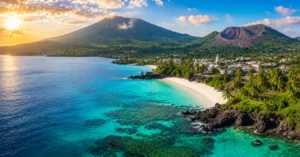
The water is the primary reason. Maldivian lagoons are extraordinary: shallow, warm, unbelievably clear, and colored in shades of turquoise and aquamarine that are genuinely surreal in person. Snorkeling directly from your villa or beach discovers reef fish, green sea turtles, and black-tipped reef sharks in an environment so pristine it feels unreal.
The diving is world-class. Manta rays gather seasonally at certain atolls, and night dives with manta rays feeding on plankton are among the most magical underwater experiences available. Whale sharks are present year-round in parts of the country. The coral walls in the outer atolls have extraordinary visibility and a diversity of reef fish that attracts serious divers from around the world.
The overwater bungalow, invented essentially in the Maldives (though Bora Bora claims competing rights), is one of the most genuinely special accommodation experiences in the world. Waking up above the lagoon, stepping directly into the water from a private ladder, watching fish from a glass floor panel, and having sunset views from a private deck with no other land in sight delivers the fantasy reliably.
Beyond luxury resorts, the Maldives has a local island tourism sector that has grown significantly. Staying in a guesthouse on a local island like Maafushi, Thulusdhoo, or Dhigurah is more affordable, gives a window into actual Maldivian life, and still puts you in the same beautiful ocean.
Top Experiences
The North Male Atoll, closest to the capital, has some of the most accessible and well-developed resorts. The Baa Atoll is a UNESCO Biosphere Reserve with the best manta ray snorkeling. Ari Atoll has good diving and whale shark encounters at its southern tip year-round. Addu Atoll in the far south is the most remote and has good wreck diving.
Male, the capital, is one of the world’s most densely populated cities, a tiny island packed with buildings and people. It is the transit point for most visitors. The fish market, the old Friday Mosque, and the local food in the restaurants near the waterfront are worth a few hours if you have a layover.
Maldivian Food and Culture
Maldivian food centers on tuna, which is caught in extraordinary quantities in the surrounding waters. Mas huni, a breakfast of shredded tuna mixed with grated coconut, onion, and chili, eaten with roshi flatbread, is the national breakfast dish. Garudhiya, a clear tuna broth served with rice and lime, is the most fundamental of all Maldivian dishes.
Travel Tip for Maldives
Citizens of most countries receive a 30-day visa-free arrival stamp. The Maldivian rufiyaa is the official currency, but US dollars are accepted almost everywhere in the resort sector. Dhivehi is the official language. English is widely spoken in tourism. The best time to visit is November to April, the dry northeast monsoon season. May to October is wetter but has fewer visitors and often lower prices. Alcohol is only permitted at resort islands, not on local islands.