Vietnam: A Journey Through Timeless Beauty and Rich Heritage
A long, slender country of extraordinary variety — from the mountains of the north to the Mekong Delta in the south, with remarkable food, history, and landscapes throughout.
Vietnam stretches over 1,600 kilometers from north to south along the eastern edge of the Indochina Peninsula. It is bordered by China to the north, Laos and Cambodia to the west, and the South China Sea to the east. The country’s shape, often described as a long S-curve, means the north and south have very different climates, cultures, and landscapes, making a full-country trip feel like visiting several distinct destinations.
Vietnam has become one of Southeast Asia’s most popular travel destinations, and for travelers who come with curiosity and flexibility, it consistently delivers. The food is outstanding and varies dramatically by region.
The history, shaped by centuries of Chinese, French, and American conflict, is ever-present and given thoughtful context in the country’s museums and memorials. The scenery, from Halong Bay’s limestone islands to the terraced rice fields of Sapa to the ancient town of Hoi An, is consistently beautiful.
Why Visit Vietnam
The food is the most immediate reason many travelers come, and it rewards the focus. Vietnamese cuisine is distinct from other Southeast Asian food traditions in its emphasis on fresh herbs, minimal oil, clean flavors, and the balance between hot, cold, crunchy, and soft. Pho, the national noodle soup, is available everywhere but tastes best in Hanoi where it originated.
Banh mi, the French-influenced sandwich filled with pate, pickled vegetables, and fresh herbs, is one of the great street foods in the world. Bun cha, com tam, cao lau, banh xeo, mi quang — every city and region has its own dishes that are worth seeking out specifically.
The history is accessible and presented honestly. The Ho Chi Minh Mausoleum and the Cu Chi Tunnels near Ho Chi Minh City give context to the American War (as it is known in Vietnam).
The Imperial Citadel of Hue and the historic town of Hoi An represent different aspects of Vietnamese pre-modern history. The Museum of Ethnology in Hanoi covers the country’s 54 recognized ethnic groups.
Top Places to Visit Vietnam
1. Hanoi
Vietnam’s capital is one of the most atmospheric cities in Southeast Asia. The Old Quarter, with its narrow streets organized by craft specialty, is dense and fascinating. Hoan Kiem Lake at the center of the city is genuinely beautiful. The street food scene around Bun Cha Huong Lien, the restaurant visited by President Obama in 2016, and dozens of other stalls and shops, is superb.
2. Halong Bay
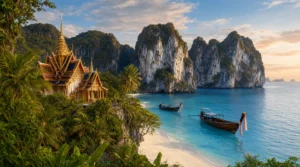
The limestone karst islands rising from the emerald waters of Halong Bay are one of the iconic images of Vietnam and a UNESCO World Heritage Site. Overnight cruises are the standard way to experience the bay, and despite the large number of boats, the scale of the bay means you can still find quiet corners.
3. Hoi An
The Ancient Town of Hoi An, a UNESCO World Heritage Site, is one of the best-preserved trading ports in Southeast Asia. The yellow-painted buildings, Japanese covered bridge, tailors, lanterns, and riverside atmosphere are beautiful. The food in Hoi An is outstanding, with white rose dumplings, cao lau noodles, and banh mi among the local specialties.
4. Ho Chi Minh City (Saigon)
Vietnam’s largest and most dynamic city runs on a relentless energy. The War Remnants Museum, which documents the American War from the Vietnamese perspective, is emotionally demanding and essential. The Reunification Palace, where the war ended in 1975, is another important historical site. The food and nightlife scene of Saigon is excellent.
5. Sapa and the Northwest
The mountain town of Sapa near the Chinese border is surrounded by some of Vietnam’s most dramatic scenery: terraced rice fields, minority villages, and the slopes of Fansipan, the highest peak in Indochina.
Travel Tips for Vietnam
Most nationalities need a visa to visit Vietnam, available as an e-visa online. The Vietnamese dong is the currency. Vietnamese is the official language. English is spoken in tourist areas. The best time to visit the north and south is October to April.
Central Vietnam around Hoi An and Hue is best from February to August. The whole country cannot be visited in ideal weather simultaneously due to the monsoon patterns moving from north to south.