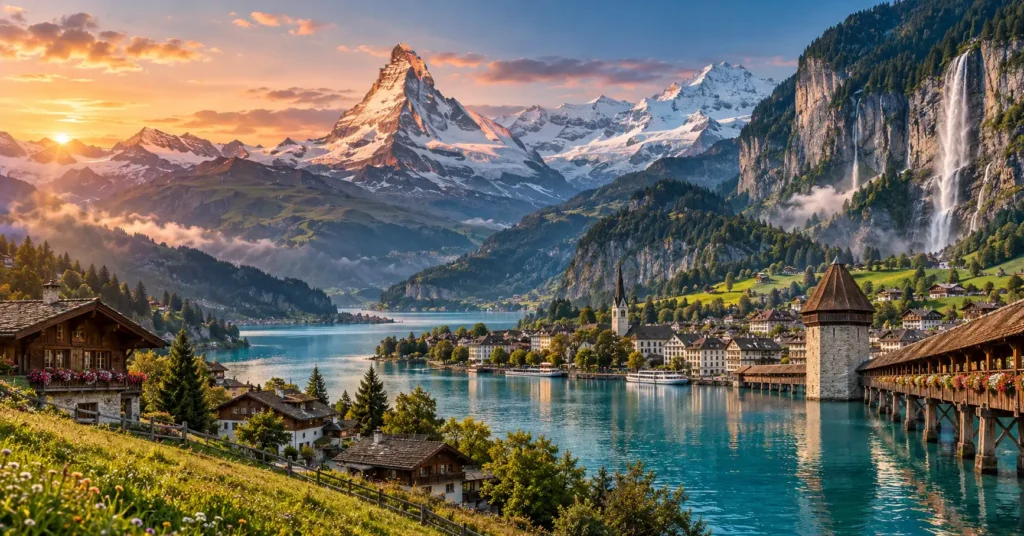
Switzerland compresses lakeside cities, glaciers, mountain railways and four language regions into one small country with excellent trains, and the best trips choose a few bases and let the rail network do the work. This guide covers 16 of the best places to visit in Switzerland, from Zurich, Lucerne and Bern to Zermatt, the Jungfrau region and Ticino, with how long to stay, when to go, and what travelers from the U.S., UK, Canada and Australia should know about Schengen entry rules, mountain safety and rescue costs right now. For more on the country, see our Switzerland destination guide or browse our Europe destination guides.
- First trip: Zurich, Lucerne, Interlaken and the Jungfrau region, and Zermatt.
- Cities: Zurich, Bern, Basel, Geneva and Lugano.
- Mountains and glaciers: Zermatt, the Jungfrau and Aletsch area, Lauterbrunnen and St. Moritz.
- Lakes and vineyards: Lucerne, Lavaux and Lake Geneva, and Lugano.
- Scenic rail: The Bernina and Albula lines of the Rhaetian Railway.
- Medieval and abbey towns: Bern, Bellinzona, St. Gallen and Appenzell.
- Entry rules: Switzerland is in the Schengen area, and the UK government says you can travel without a visa for up to 90 days in any 180-day period.
- Mountain safety: Canada’s government says avalanches can be fatal, even with light snow accumulation, and advises buying travel insurance that includes helicopter rescue and medical evacuation.
- Costs: The UK government says you may need to show you have enough money for your stay, around 100 Swiss francs a day.
Table of contents
- How to Choose the Best Places to Go in Switzerland
- Zurich: Best for Lake Views and Old Town Streets
- Lucerne: Best for a Medieval Lakeside Town
- Bern: Best for an Arcaded Old City
- Basel: Best for Museums and a Riverside Old Town
- Geneva: Best for Lake Views and International Diplomacy
- Lausanne and Lavaux: Best for Vineyard Terraces Above the Lake
- Interlaken: Best for Lakes and a Mountain Base
- Lauterbrunnen and Grindelwald: Best for Waterfalls and Alpine Villages
- Aletsch and Jungfrau: Best for Glacier Views
- Zermatt: Best for the Matterhorn and Car-Free Streets
- St. Moritz and the Engadin: Best for High Valley Lakes and Winter Sports
- Bernina and Albula Railway: Best for Scenic Train Rides
- Lugano: Best for Lakeside Promenades and an Italian Feel
- Bellinzona: Best for Three Castles
- St. Gallen: Best for a Baroque Abbey and Library
- Appenzell: Best for Green Hills and Traditional Villages
- Sample Switzerland Itineraries
- Best Ways to Get Around Switzerland
- Best Time to Visit Switzerland
- Entry, Safety and Practical Rules for US, UK, Canadian and Australian Travelers
- Frequently Asked Questions
- Final Thoughts
How to Choose the Best Places to Go in Switzerland
Switzerland is small, and trains, buses and boats link most places on time. The best plan for a first visit is to choose two or three bases, such as Lucerne, Interlaken and Zermatt, and treat the rest as day trips. Central Switzerland and the Bernese Oberland suit a first trip, and the southeast and Ticino add the Alps and an Italian feel.
UNESCO lists 13 World Heritage properties in Switzerland: nine cultural and four natural. That is why this guide links to the official listing wherever one exists.
| Your trip | A good starting plan |
|---|---|
| First visit, about 7 days | Zurich, Lucerne, Interlaken and Zermatt |
| 10 days | Add Bern, Geneva or Lausanne, and Lugano |
| Mountains | Zermatt, Lauterbrunnen, Grindelwald and the Aletsch area |
| Scenic trains | The Bernina line, the Albula line and Lucerne to Interlaken |
| Cities | Zurich, Bern, Basel and Geneva |
| Italian Switzerland | Lugano, Locarno and Bellinzona |
Zurich: Best for Lake Views and Old Town Streets
Zurich is the main gateway and a good first or last stop. The old town sits on a river that runs into a lake, with cafes, churches and small shops, and the city has strong museums and a lively food scene. A lake swim in summer is part of the local routine.
Zurich is expensive, so plan your days around free or low-cost walks and views. Watch your belongings in stations and on trains. The UK government says petty theft is up, especially in larger cities and at Geneva airport, and Canada says pickpocketing and purse snatching are common, especially in major cities and on trains.
Suggested time: Two days.
Best season: Late spring to early autumn.
Planning tip: Use the rail network from the airport, and keep bags in front of you on crowded trains.
Lucerne: Best for a Medieval Lakeside Town
Lucerne is a compact old town on a lake with mountains behind it. A wooden covered bridge, a lakefront promenade and a town wall make it an easy walk, and boats and mountain excursions leave from the harbor.
It works as a base for trips to Mount Pilatus and Rigi, and for lake cruises. Stay overnight to see the town after the day visitors leave.
Suggested time: Two days.
Best season: Spring to early autumn.
Planning tip: Check mountain railway and cable car status before you plan your excursion day.
Bern: Best for an Arcaded Old City
Bern is the capital, a small city on a river bend with a medieval center. UNESCO lists the Old City of Berne, inscribed in 1983. Covered arcades and fountains line the main streets.
It is quiet and easy to cover in half a day, and it works well as a stop between Zurich and the Bernese Oberland. Take an evening walk along the river.
Suggested time: One day.
Best season: Spring to early autumn.
Planning tip: Walk the old city early, and finish with a view over the river from the bridge.
Basel: Best for Museums and a Riverside Old Town
Basel sits on the Rhine in the northwest, where Switzerland meets France and Germany. It has a medieval old town, a cathedral and a strong art museum scene.
It is a good city for a rainy day, and a good base for crossing into neighboring regions. In summer, locals swim and float in the river. Follow local advice and check conditions before you enter any river.
Suggested time: Two days.
Best season: Spring to early autumn.
Planning tip: Buy museum tickets ahead for busy weekends.
Geneva: Best for Lake Views and International Diplomacy
Geneva is a lakeside city in the French-speaking southwest, known for its international organizations, its lake fountain and its old town. Boat trips run on the lake, and the Alps are visible on a clear day.
Take care at the airport and on trains. The UK government says petty theft is up, especially at Geneva airport and on trains to and from Geneva.
Suggested time: Two days.
Best season: Late spring to early autumn.
Planning tip: Keep valuables in a zipped pocket on airport trains.
Lausanne and Lavaux: Best for Vineyard Terraces Above the Lake
Lausanne is a hillside city on Lake Geneva, and Lavaux is the vineyard coast just east of it. UNESCO lists the Lavaux, Vineyard Terraces, inscribed in 2007. Walking paths run through terraced vineyards above the lake, with village stops and wine cellars.
It is an easy day trip by train and boat. Choose a mild day and carry water, since the vineyard paths are exposed.
Suggested time: One to two days.
Best season: Late spring and autumn.
Planning tip: Walk one section and take the train back, rather than trying the whole route.
Interlaken: Best for Lakes and a Mountain Base
Interlaken sits between two lakes at the foot of the Bernese Alps and is a base for adventure sports and mountain trips. It is well connected by rail, and day trips reach many of the best known valleys.
Adventure sports are popular here, but they carry risk. The UK government says adventure sports can be risky, that you should check your tour operator is well established, and that your insurance should cover the specific activity.
Suggested time: Three days.
Best season: Late spring to early autumn, and winter for snow sports.
Planning tip: Book adventure activities with established operators, and check your insurance.
Lauterbrunnen and Grindelwald: Best for Waterfalls and Alpine Villages
Lauterbrunnen is a deep valley with many waterfalls, and Grindelwald is a village below the north face of a major mountain. Both are reached by train from Interlaken, and both are good bases for walks, cable cars and mountain railways.
Mountain weather changes fast. Canada says weather at high altitude can change rapidly, even in summer. Check forecasts, carry layers and start early.
Suggested time: Three days.
Best season: Summer for walking, winter for skiing.
Planning tip: Check cable car and trail status each morning, and keep a bad weather plan.
Aletsch and Jungfrau: Best for Glacier Views
The Aletsch area is part of the Swiss Alps Jungfrau-Aletsch World Heritage property. UNESCO’s listing of the Swiss Alps Jungfrau-Aletsch says the site covers 82,400 hectares, includes the most glaciated part of the mountain range, and contains the largest glacier in Eurasia.
Viewpoints and walks are reached by cable car and train, and high altitude can affect some visitors. Wear sunglasses and sun protection, because glacier light is strong. Stay on marked paths and never walk on a glacier without a guide.
Suggested time: One to two days.
Best season: Summer.
Planning tip: Choose a clear day for the high viewpoints, and book high-altitude trips for the morning.
Zermatt: Best for the Matterhorn and Car-Free Streets
Zermatt is a mountain village at the foot of the Matterhorn, with cable cars, hiking trails and winter skiing. The village is reached by train, and cars are not part of everyday life there.
Check conditions before any mountain excursion. Canada advises that outdoor activities such as hiking, mountaineering and snow sports can be dangerous, and that avalanches can be fatal. Carry an avalanche beacon for snow sports, and ski only on marked runs. The UK government says off-piste skiing is very dangerous because of avalanches.
Suggested time: Two to three days.
Best season: Summer for hiking, winter for skiing.
Planning tip: Book accommodation early, and check the Matterhorn view forecast before you plan the high lift.
St. Moritz and the Engadin: Best for High Valley Lakes and Winter Sports
St. Moritz is an alpine resort in the southeast, with lakes, trails and a long winter sports tradition. The Engadin valley around it is quieter, with small villages and cross-country trails.
It is expensive in high season. Summer gives you lake walks and trails with fewer crowds, and winter suits skiing and snow activities. Check avalanche and weather warnings before any alpine trip.
Suggested time: Two to three days.
Best season: Summer and winter.
Planning tip: Book mountain transport and lodging ahead for winter holidays.
Bernina and Albula Railway: Best for Scenic Train Rides
The Rhaetian Railway crosses the Alps on two historic lines. UNESCO’s listing of the Rhaetian Railway in the Albula / Bernina Landscapes says the Albula line opened in 1904 and is 67 km long with 42 tunnels and covered galleries and 144 viaducts and bridges, and that the Bernina line is 61 km long with 13 tunnels and galleries and 52 viaducts and bridges.
The rides are very scenic, and they work as a day trip from St. Moritz or as part of a journey into southern Switzerland. Check seat reservation rules and timetables on the railway’s official site.
Suggested time: One day.
Best season: Summer for views, winter for snow scenes.
Planning tip: Reserve a window seat on panoramic trains, and carry layers for high passes.
Lugano: Best for Lakeside Promenades and an Italian Feel
Lugano is the main city of Ticino, the Italian-speaking region in the south, with a lakeside promenade, a pedestrian center and mountain viewpoints reached by cable car and funicular. The pace and food are Italian, with Swiss reliability.
It is warmer than the north, and it works as a gentle end to a mountain trip. Swimming spots on the lake are popular in summer, so check conditions and local rules first.
Suggested time: Two days.
Best season: Spring to early autumn.
Planning tip: Use the local boats and funiculars instead of driving in the old center.
Bellinzona: Best for Three Castles
Bellinzona is a small town in Ticino with a trio of castles on the hills. UNESCO lists the Three Castles, Defensive Wall and Ramparts of the Market-Town of Bellinzona, inscribed in 2000.
It is a short train ride from Lugano or Locarno, and the castles can be visited in half a day. Wear good shoes, because the paths between the castles are uneven.
Suggested time: Half a day.
Best season: Spring to early autumn.
Planning tip: Check castle opening hours and days before you go.
St. Gallen: Best for a Baroque Abbey and Library
St. Gallen is a town in the northeast with a large abbey district. UNESCO lists the Abbey of St Gall, inscribed in 1983. The abbey library and cathedral are the main sights.
It is a good stop between Zurich and Lake Constance or the Appenzell region. The old town is small and easy to walk.
Suggested time: One day.
Best season: Spring to early autumn.
Planning tip: Check library opening times and any limits on photography before you go.
Appenzell: Best for Green Hills and Traditional Villages
Appenzell is a rural region in the northeast with rolling hills, small villages, farms and mountain trails. A cable car reaches the Säntis massif, and the pace is slower than in the big resorts.
It is a good choice for walkers who want less crowded trails. Mountain weather can change, so carry layers and check forecasts before you climb.
Suggested time: Two days.
Best season: Late spring to early autumn.
Planning tip: Use the local rail and bus network, and book a farm stay if you want a quieter trip.
Sample Switzerland Itineraries
These are starting points, not fixed routes. Switzerland’s trains are efficient, but each move costs time, so keep the number of bases low.
| Trip length | Route | Why it works |
|---|---|---|
| 5 days | Zurich (1), Lucerne (2), Interlaken (2) | A short, classic loop |
| 7 days | Zurich (1), Lucerne (2), Interlaken and Lauterbrunnen (2), Zermatt (2) | Adds the Matterhorn |
| 10 days | Zurich (1), Lucerne (2), Interlaken (2), Zermatt (2), Lausanne and Lavaux (1), Lugano (2) | A fuller loop across language regions |
Best Ways to Get Around Switzerland
Trains, buses, boats and cable cars connect almost everything, and timetables are reliable. Walking is easy in small towns, and a rental car is only helpful for rural areas. In car-free villages such as Zermatt, you leave the car at the station and continue by train or shuttle.
If you drive, the UK government notes that after a car accident you can use the orange emergency phones on Swiss motorways to ask for help. Check the vignette and licence rules for your trip with the Swiss authorities.
Best Time to Visit Switzerland
Switzerland suits different seasons, depending on whether you want hiking or skiing.
| Season | What to expect |
|---|---|
| Spring | Mild weather, flowers and some mountain lifts and trails still closed. |
| Summer | The main season for hiking, lakes and mountain trains. The busiest and most expensive time. |
| Autumn | Clear weather, fall colors and fewer crowds. Some high lifts close by late autumn. |
| Winter | Skiing and snow activities, Christmas markets and short days. Canada warns that avalanches can be fatal. |
The UK government warns about sudden weather changes, rockfalls, thunderstorms and flooding in alpine areas, and says wildfire risk is high in summer, especially after drought.
Entry, Safety and Practical Rules for US, UK, Canadian and Australian Travelers
Visas and entry
Switzerland is part of the Schengen area. The UK government says you can travel without a visa to the Schengen area for up to 90 days in any 180-day period. Canada’s government gives the same 90 days in any 180-day period rule for Canadians.
- Passport: The UK government says your passport must have been issued less than 10 years before you arrive and must be valid for at least 3 months after you plan to leave the Schengen area. Canada gives the same 3 month rule.
- Entry/Exit System: The EU’s Entry/Exit System is being implemented across the Schengen area. Canada says it collects information about your trip, and that no action is needed before you travel.
- ETIAS: Canada’s government said in October 2026 that ETIAS applications were not yet open, and noted that Switzerland is not explicitly listed among the participating countries on its page, so check the official EU website.
- Border controls: Canada says border controls may be temporarily reintroduced, so check before you travel.
- Customs and funds: The UK government says there are strict rules about goods you can take into and out of Switzerland, and that you may need to show enough money for your stay, around 100 Swiss francs a day.
Entry rules change. Confirm the latest requirements with the Swiss authorities or the EU’s official travel site before you book.
Safety: what each government says
Switzerland is a very safe country, and mountain hazards are the main risk.
- United States: The State Department lists Switzerland at Level 1, Exercise Normal Precautions.
- Canada: Canada’s advice is to take normal security precautions. It warns that hiking, mountaineering and snow sports can be dangerous, that avalanches can be fatal, and that medical and hospital costs are much higher than in Canada, with immediate payment usually required.
- United Kingdom: The UK government says terrorist attacks cannot be ruled out, that serious crime is low but petty theft is up, and that off-piste skiing is very dangerous because of avalanches. It advises making sure your insurance covers mountain rescue and helicopter costs.
- Australia: Check Smartraveller for the latest advice.
Practical rules
- Insurance: Buy travel insurance that includes helicopter rescue and medical evacuation.
- Avalanche risk: Check MeteoSwiss before snow sports, and carry an avalanche beacon if you go off marked runs.
- Drugs: Illegal drugs, including cannabis, carry severe penalties for visitors.
- Currency: Switzerland uses the Swiss franc, and cards are widely accepted.
- Emergencies: Call 118 for fire and wildfire, according to the UK government.
Frequently Asked Questions
What are the best places to visit in Switzerland for first-timers?
For a first trip, start with Zurich, Lucerne, Interlaken and Zermatt. They cover a city, a lakeside town and the main mountain areas, all linked by train.
How many days do you need in Switzerland?
For a first visit, 7 to 10 days is enough for three or four bases. Fewer bases with longer stays work better than moving every night.
What is the best time to visit Switzerland?
Summer is best for hiking, lakes and mountain trains, and winter is best for skiing. Spring and autumn are quieter, though some high lifts and trails may be closed.
Do Americans need a visa for Switzerland?
Not for short stays. Switzerland is in the Schengen area, and visa-free stays are limited to 90 days in any 180-day period. The EU’s Entry/Exit System now records entries, and ETIAS had not opened as of Canada’s October 2026 advice.
Is Switzerland safe for tourists?
Yes. The U.S. State Department lists Switzerland at Level 1, and Canada advises normal security precautions. The main risks are mountain hazards such as avalanches and weather changes, and petty theft in cities and on trains.
Is Switzerland expensive to visit?
It can be. Medical and hospital costs are much higher than in Canada, according to the Canadian government, and mountain rescue can be costly, so buy insurance that covers helicopter rescue. Plan a daily budget and book mountain trips and lodging early.
Final Thoughts
The best places to visit in Switzerland are the ones that fit your season, your budget and your comfort in the mountains. Pick two or three bases, buy insurance that covers mountain rescue, and give each stop enough time to feel like more than a photo stop. Then come back for another region on your next trip.