
New Zealand packs volcanoes, fjords, glaciers, beaches and small cities into two islands, and the best trips plan fewer stops with more time at each. This guide covers 16 of the best places to visit in New Zealand, from Auckland and the Bay of Islands to Queenstown, Milford Sound and Stewart Island, with how long to stay, when to go, and what travelers from the U.S., UK, Canada and Europe should know about the NZeTA, the visitor levy, biosecurity rules and driving on the left right now. For more on the country, see our New Zealand destination guide or browse our Oceania destination guides.
- First trip: Auckland, Rotorua, Queenstown and Milford Sound.
- Volcanoes and thermal areas: Rotorua and Tongariro National Park.
- Fiords and mountains: Milford Sound, Aoraki Mount Cook, Wānaka and Queenstown.
- Coast and wildlife: The Bay of Islands, Abel Tasman, Kaikōura and Stewart Island.
- Cities: Auckland, Wellington, Christchurch and Dunedin.
- Entry rules: Visitors from visa-waiver countries need an NZeTA before they travel, according to the UK and Canadian governments. Immigration New Zealand says most visitors also pay an International Visitor Conservation and Tourism Levy of NZD 100 when they apply.
- Driving: You drive on the left, and Canada’s government says highways can be narrow, winding and hilly.
- Biosecurity: The UK government says it is illegal to import most food products, and fines can reach 100,000 New Zealand dollars.
Table of contents
- How to Choose the Best Places to Go in New Zealand
- Auckland: Best for Harbors, Islands and Volcanic Hills
- Bay of Islands: Best for Sailing and Early Māori and European History
- Coromandel Peninsula: Best for Beaches and Cathedral Cove
- Rotorua: Best for Geothermal Areas and Māori Culture
- Tongariro National Park: Best for Volcanic Hikes
- Wellington: Best for Museums, Food and Harbor Views
- Abel Tasman: Best for Golden Beaches and Coastal Walks
- Kaikōura: Best for Whales and Coastal Seafood
- Christchurch: Best for Gardens and a Rebuilt City Center
- Franz Josef and the West Coast: Best for Glaciers and Rainforest
- Aoraki Mount Cook: Best for Alpine Views and Starry Skies
- Wānaka: Best for Lakes and Quieter Mountain Time
- Queenstown: Best for Adventure Activities
- Milford Sound and Fiordland: Best for Fiords and Waterfalls
- Dunedin: Best for Wildlife and Victorian Architecture
- Stewart Island: Best for Birds and a Quiet End of the Map
- Sample New Zealand Itineraries
- Best Ways to Get Around New Zealand
- Best Time to Visit New Zealand
- Entry, Safety and Practical Rules for US, UK, Canadian and Australian Travelers
- Frequently Asked Questions
- Final Thoughts
How to Choose the Best Places to Go in New Zealand
New Zealand is small on a map but slow to cover, because roads are winding and scenery makes you stop. The best plan for a first visit is to choose either the North Island or the South Island, pick three or four bases and keep drives under about four hours. The South Island suits mountains and fiords, and the North Island suits volcanoes, beaches and Māori culture.
UNESCO lists three World Heritage properties in New Zealand: two natural and one mixed. That is why this guide links to the official listing wherever one exists.
| Your trip | A good starting plan |
|---|---|
| First visit, about 10 days | Auckland, Rotorua, Queenstown and Milford Sound |
| 14 days | Add Tongariro, Wellington and Aoraki Mount Cook |
| Hiking and mountains | Tongariro, Aoraki Mount Cook, Wānaka and Fiordland |
| Adventure | Queenstown, Wānaka and Franz Josef |
| Coast and wildlife | Bay of Islands, Abel Tasman, Kaikōura and Stewart Island |
| Cities and food | Auckland, Wellington, Christchurch and Dunedin |
Auckland: Best for Harbors, Islands and Volcanic Hills
Auckland is a main gateway and a big city, set on a harbor with islands, volcanic cones and beaches within a short ferry ride. It is a good place to recover from a long flight and to pick up a rental car.
A ferry to Waiheke Island is the easy day trip for wine and beaches. The city has strong food and a lively waterfront, but traffic is heavy at rush hour. Keep valuables out of parked cars, because the UK government says thieves target unattended vehicles, especially hire cars and camper vans in major tourist areas.
Suggested time: Two to three days.
Best season: Summer and early autumn, though the city is mild year-round.
Planning tip: Book your rental car for the day you leave the city, not the day you arrive.
Bay of Islands: Best for Sailing and Early Māori and European History
The Bay of Islands is a sheltered bay in the far north with many islands, small towns and beaches. Boat trips, sailing and dolphin watching are the main activities, and Waitangi is a major history site.
It is a long drive from Auckland, so allow at least two nights. Weather can turn quickly on the water, so keep a spare day in your plan for cancelled boat trips.
Suggested time: Two to three days.
Best season: Summer and early autumn.
Planning tip: Choose a boat operator with a clear weather policy and ask about refunds.
Coromandel Peninsula: Best for Beaches and Cathedral Cove
The Coromandel is a rugged peninsula east of Auckland, with beaches, forest and small towns. Cathedral Cove, with its rock arch, and Hot Water Beach are the best-known stops.
Roads are narrow and winding, so give yourself time. Check tide times for Hot Water Beach, and take care on coastal walks in rough weather.
Suggested time: Two days.
Best season: Summer and early autumn.
Planning tip: Walk to Cathedral Cove early to avoid crowds and parking pressure.
Rotorua: Best for Geothermal Areas and Māori Culture
Rotorua is a geothermal town on the North Island, with steaming vents, mud pools and lakes. It is also a main center for Māori culture, with cultural performances and guided visits. Visitors can book a hangi meal or a guided tour of a living cultural village.
Choose experiences run by Māori operators where possible, and check opening hours in advance. The smell of sulfur is part of the experience, and thermal areas have marked paths for a reason. Stay on them.
Suggested time: Two days.
Best season: Any time.
Planning tip: Book cultural evenings and thermal parks ahead in summer.
Tongariro National Park: Best for Volcanic Hikes
Tongariro National Park is the volcanic heart of the North Island. UNESCO’s listing of Tongariro National Park says that in 1993 it became the first property inscribed under the revised criteria for cultural landscapes, that its mountains have cultural and religious significance for the Māori people, and that the park has active and extinct volcanoes and spectacular landscapes.
The Tongariro Alpine Crossing is the famous day hike, but it is a serious mountain walk with fast-changing weather. The UK government says there are several active volcanoes on the North Island. Check conditions, go with the right gear and consider a guided trip.
Suggested time: Two days.
Best season: Summer and early autumn.
Planning tip: Check the forecast and the track status the day before, and carry layers and water.
Wellington: Best for Museums, Food and Harbor Views
Wellington is the capital, a compact city on a windy harbor with museums, cafes and a strong arts scene. The waterfront and cable car give you easy views, and the national museum is a good half day.
The city sits in an earthquake zone. The UK government says New Zealand is in a major earthquake zone and that tsunamis can happen along the coastlines, so learn the evacuation signs and zones. Wellington is also the departure point for the ferry to the South Island.
Suggested time: Two days.
Best season: Summer and early autumn.
Planning tip: Book the Cook Strait ferry early in summer.
Abel Tasman: Best for Golden Beaches and Coastal Walks
Abel Tasman National Park is at the top of the South Island, with golden beaches, clear water and forest tracks. Walkers can use a water taxi to hike one section and ride back, and kayak tours are popular.
It is best in summer, and tides and weather affect the water taxis and some track crossings. Plan around the schedules and carry food and water.
Suggested time: Two to three days.
Best season: Summer.
Planning tip: Book water taxis and any hut or campsite space early.
Kaikōura: Best for Whales and Coastal Seafood
Kaikōura is a small coastal town on the east coast of the South Island, with mountains close to the sea. Whale watching, dolphin trips and seal colonies are the main draws, and seafood is a local specialty.
Boat trips depend on sea conditions and can be canceled at short notice. Keep an extra night if you can, and book trips with a clear refund policy.
Suggested time: One to two days.
Best season: Year-round, but check each trip’s season.
Planning tip: Book your boat trip first, then build the rest of the stop around it.
Christchurch: Best for Gardens and a Rebuilt City Center
Christchurch is a major South Island city, with parks and gardens and a city center that has been rebuilt after earthquakes. It is a good gateway for the Canterbury region and for road trips across the island.
The city is flat and easy to explore by bike or on foot. It also works as a base for Akaroa and for trips to the mountains.
Suggested time: Two days.
Best season: Summer and early autumn.
Planning tip: Hire a car here if you plan a South Island road trip, and plan your route before you set off.
Franz Josef and the West Coast: Best for Glaciers and Rainforest
The West Coast of the South Island has rainforest, glaciers and wild beaches. Franz Josef and Fox Glaciers are the main stops, and Punakaiki’s Pancake Rocks are a short walk on the coast road.
The West Coast is wet, and rain can cancel glacier trips. Floods and landslides can close roads, according to the UK government, so check road conditions and keep your schedule flexible.
Suggested time: Two days.
Best season: Summer. Rain is common year-round.
Planning tip: Book guided glacier trips with a refund option, and leave a spare day.
Aoraki Mount Cook: Best for Alpine Views and Starry Skies
Aoraki Mount Cook is a high peak in the Southern Alps. The village is a small base for walks on marked tracks with views of glaciers and peaks.
Weather can change quickly, and the UK government says conditions can quickly become dangerous in some coastal and exposed areas. Leave your itinerary with family or friends, and stay on marked paths.
Suggested time: One to two days.
Best season: Summer and early autumn.
Planning tip: Start short walks early in the day, and check conditions with the visitor center.
Wānaka: Best for Lakes and Quieter Mountain Time
Wānaka is a lakeside town in the Southern Alps, with a quieter feel than Queenstown. Walks, lake swims, skiing in winter and mountain biking in summer are the main activities.
It works as a calm base for several days, or a stop between Queenstown and the West Coast. The famous lakeside tree is a popular photo stop early in the morning.
Suggested time: Two to three days.
Best season: Summer for lakes, winter for skiing.
Planning tip: Check road and weather conditions before crossing the mountain passes in winter.
Queenstown: Best for Adventure Activities
Queenstown is the adventure center of the South Island, with bungy jumping, jet boats, skydiving and skiing, set beside a lake and mountains. It is also a base for day trips to Milford Sound and wine areas.
Choose adventure operators carefully. The UK government says British nationals have been involved in tragic accidents while doing extreme sports activities, and Canada advises using reputable guides and checking that your insurance covers the activity.
Suggested time: Three to four days.
Best season: Summer for activities, winter for skiing.
Planning tip: Check that your travel insurance covers adventure sports before you book.
Milford Sound and Fiordland: Best for Fiords and Waterfalls
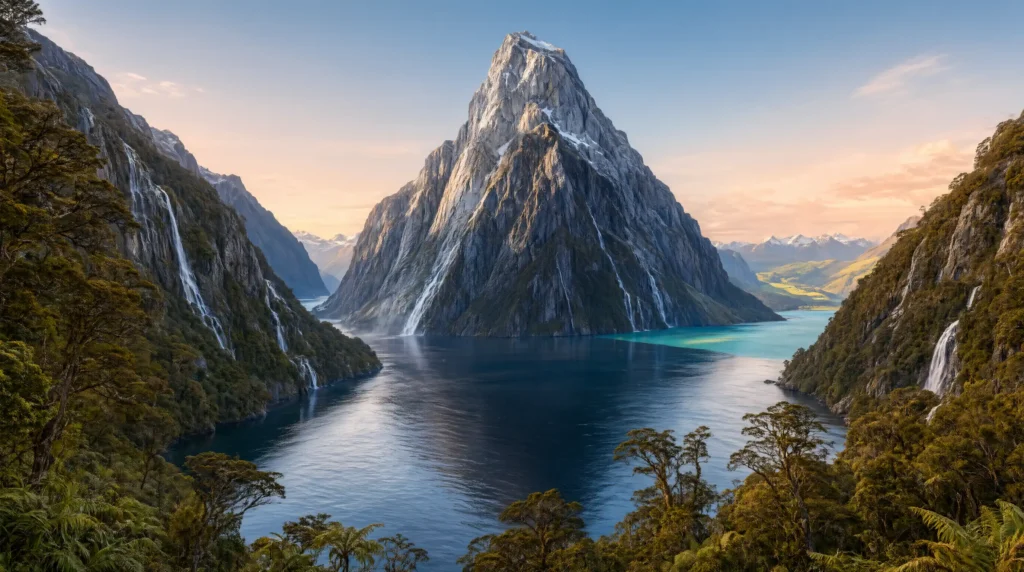
Milford Sound is a well-known fiord, in Fiordland National Park in the south-west. UNESCO’s listing of Te Wāhipounamu, South West New Zealand says the landscape has been shaped by successive glaciations into fjords, rocky coasts, towering cliffs, lakes and waterfalls. It says two-thirds of the park is covered with southern beech and podocarps, some over 800 years old, and that the kea, the only alpine parrot in the world, and the rare takahe live there.
Visitors usually reach Milford Sound on a day trip from Queenstown, or by hiking the Milford Track. The Department of Conservation says Great Walks huts and campsites need advance booking during the season, and that camping is not permitted on the Milford Track. Plan far ahead and check the current season dates on the official site.
Suggested time: One day for a cruise, four to five days for the Milford Track.
Best season: Summer for walking, though rain is common in any season.
Planning tip: Book your cruise or walk early, and carry rain gear.
Dunedin: Best for Wildlife and Victorian Architecture
Dunedin is a university city on the southeast coast, with Victorian and Edwardian buildings and a strong food and arts scene. The Otago Peninsula nearby is known for wildlife, including albatross and penguin colonies.
Wildlife viewing is best with guided tours, which help protect the animals. Keep a respectful distance and follow the guides’ instructions.
Suggested time: Two days.
Best season: Summer and early autumn.
Planning tip: Book wildlife tours ahead, and wear warm layers because the coast is windy.
Stewart Island: Best for Birds and a Quiet End of the Map
Stewart Island, also called Rakiura, is the small island south of the South Island, with a quiet village, walking tracks and a strong chance of seeing native birds. It is reached by ferry or a short flight from Invercargill.
The weather is changeable, so pack rain gear, and book accommodation early in summer. New Zealand also lists the Sub-Antarctic Islands, inscribed in 1998, as a UNESCO site, though they are remote and not a normal tourist trip.
Suggested time: Two days.
Best season: Summer.
Planning tip: Check ferry schedules and weather before you travel, and keep a spare day.
Sample New Zealand Itineraries
These are starting points, not fixed routes. New Zealand’s roads are slow, so keep the number of bases low.
| Trip length | Route | Why it works |
|---|---|---|
| 7 days | Auckland (1), Rotorua (2), fly to Queenstown (3), Milford Sound (1) | A short North and South Island mix |
| 10 days | Auckland (2), Rotorua (2), Wellington (1), Christchurch (1), Aoraki Mount Cook (1), Queenstown (3) | A broader loop |
| 14 days | Auckland (2), Bay of Islands (2), Rotorua (2), Tongariro (1), Wellington (1), Abel Tasman (2), Franz Josef (1), Queenstown (3) | A fuller loop across both islands |
Best Ways to Get Around New Zealand
A rental car or camper van is the easiest way to see most of the country, and domestic flights link the main cities and Queenstown. Buses and coaches serve major routes, and ferries cross Cook Strait between Wellington and the South Island.
You drive on the left, and the roads need care. Canada says drink-driving and speeding are common. The UK government says you can use a UK photocard driving licence for up to 18 months and that private vehicle drivers must get insurance, including accident cover.
Best Time to Visit New Zealand
New Zealand’s seasons are the reverse of the Northern Hemisphere. Summer runs from December to February.
| Season | What to expect |
|---|---|
| Summer (December to February) | Warm weather, long days and the busiest time. Great Walks and popular tours book out early. |
| Autumn (March to May) | Settled weather, autumn colors in the south and fewer crowds. |
| Winter (June to August) | Skiing around Queenstown and Wānaka, and shorter days. Canada says weather can change quickly, particularly during winter. |
| Spring (September to November) | Changeable weather, lambs and wildflowers, and lower prices. |
Canada says cyclones typically run from November to April, and that landslides and wildfires are also hazards. Great Walks seasons are fixed. The Department of Conservation’s 2026/27 Great Walks season runs from 1 November 2026 to 30 April 2027, so plan around those dates.
Entry, Safety and Practical Rules for US, UK, Canadian and Australian Travelers
Visas and entry
New Zealand uses an electronic travel authority for most visa-waiver visitors.
- NZeTA: The UK government says that if you are entering without a visa you need an NZeTA before you travel. It can take up to 72 hours to process and is valid for up to 2 years. Canada gives the same 2 year validity and says Canadians can stay up to 90 days. Immigration New Zealand says Australian citizens do not need a visa or an NZeTA.
- Visitor levy: The levy is NZD 100 for most international visitors, paid when you apply for the NZeTA. It is not refundable, even if the application is declined.
- Passport: The UK and Canadian governments say your passport must be valid for at least 3 months after you plan to leave.
- Onward travel: You must show proof of a return or onward ticket and enough money for your stay.
- Traveller declaration: Everyone entering must complete the New Zealand Traveller Declaration, which the UK government describes as free.
- Biosecurity: The UK government says it is illegal to import most food products, that you must declare anything that may be prohibited, and that fines can reach 100,000 New Zealand dollars or a prison sentence.
Entry rules change. Confirm the latest requirements on the Immigration New Zealand site before you book.
Safety: what each government says
New Zealand is a safe destination for most travelers. The main risks are driving, outdoor activities and natural hazards.
- United States: The State Department lists New Zealand at Level 1, Exercise Normal Precautions.
- Canada: Canada’s advice is to take normal security precautions. It warns about earthquakes and tsunamis, dangerous adventure tourism, narrow and hilly roads, and weather that can change quickly.
- United Kingdom: The UK government says New Zealand is in a major earthquake zone, that there are several active volcanoes on the North Island, that crime levels are generally low, and that thieves may target unattended vehicles. It also says importing illegal drugs could result in a prison sentence of up to 12 years.
- Australia: Check Smartraveller for the latest advice.
Practical rules
- Earthquakes: Learn the Drop, Cover, Hold steps, and know your tsunami evacuation zone if you stay on the coast.
- Outdoor activities: Leave your itinerary with someone, check the forecast and carry the right gear.
- Cars: Do not leave possessions in unattended vehicles, even if out of sight.
- Currency: New Zealand uses the New Zealand dollar.
- Travel insurance: Get coverage that includes adventure activities and emergency medical costs, because healthcare is not free for visitors.
Frequently Asked Questions
What are the best places to visit in New Zealand for first-timers?
For a first trip, start with Auckland, Rotorua, Queenstown and Milford Sound. They cover the main city, the geothermal North Island and the best-known scenery in the south.
How many days do you need in New Zealand?
For a first visit, 10 to 14 days is enough for one island and part of the other. Roads are slow, so fewer bases with longer stays work better than rushing.
What is the best time to visit New Zealand?
Summer, from December to February, is the busiest and warmest time. Autumn and spring have fewer crowds, and winter suits skiing. Great Walks run on fixed seasons, so check those dates first.
Do Americans need a visa for New Zealand?
Not for short tourist stays, but you need an NZeTA before you travel, plus the visitor levy of NZD 100. Apply through the official Immigration New Zealand channels and check the current fees.
Is New Zealand safe for tourists?
Yes. The U.S. State Department lists New Zealand at Level 1, and Canada advises normal security precautions. The main risks are driving on the left, earthquakes, volcanoes, weather and adventure sports.
Do you need to book the Great Walks?
Yes. The Department of Conservation says Great Walks huts and campsites need advance booking during the season, and that camping is not permitted on the Milford Track. Bookings open months ahead and sell out quickly.
Final Thoughts
The best places to visit in New Zealand are the ones that fit your season, your driving comfort and how far you want to go in a day. Pick one island, get your NZeTA and levy sorted early, and give each stop enough time to feel like more than a photo stop. Then come back for the other island next time.