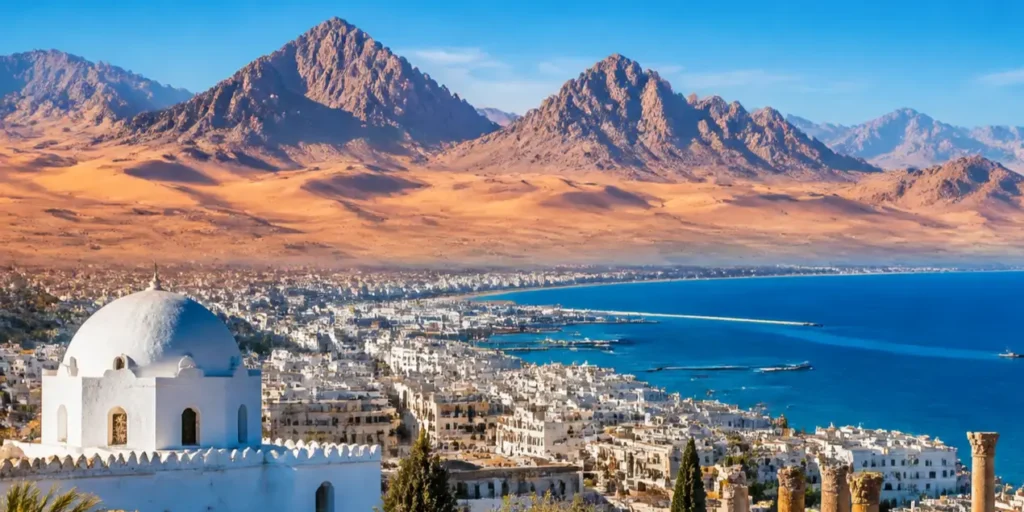
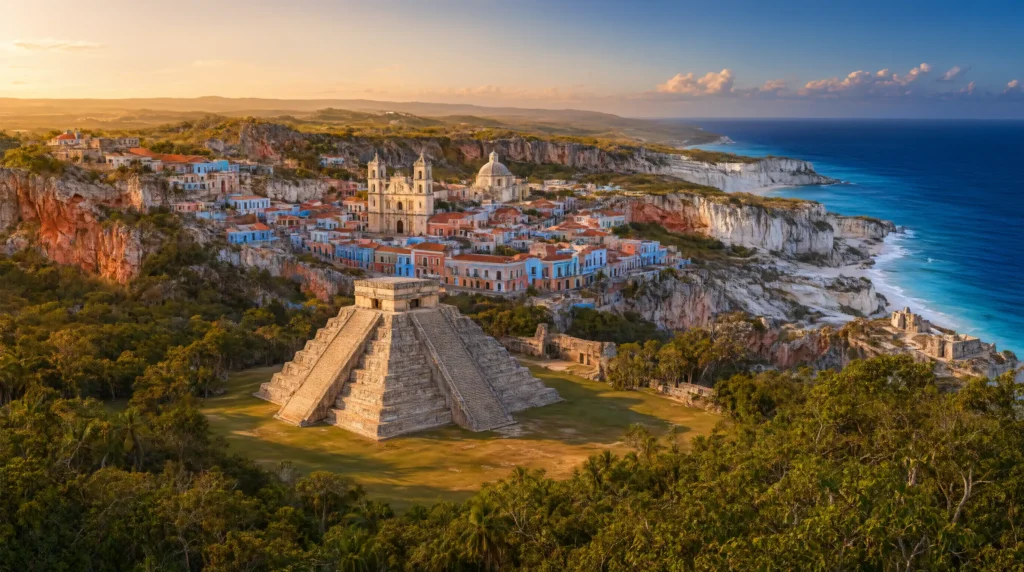
Mexico offers ancient Maya and Aztec sites, colonial cities, Caribbean and Pacific beaches and a food culture that changes from state to state, and the best trips pick a region and check current safety advice before booking. This guide covers 16 of the best places to visit in Mexico, from Mexico City and Oaxaca to the Yucatán and Baja, with how long to stay, when to go, and what travelers from the U.S., UK, Canada and Australia should know about entry forms, hurricane season and government travel warnings right now. Safety advice varies a lot by state, so read the safety section before you plan a route. For more on the country, see our Mexico destination guide or browse our North America destination guides.
- First trip: Mexico City, Oaxaca and the Yucatán (Mérida and Chichén Itzá, or Tulum).
- History and ruins: Teotihuacan, Chichén Itzá, Uxmal, Monte Albán and Calakmul.
- Colonial cities: Puebla, Guanajuato, San Miguel de Allende and Querétaro.
- Beaches and islands: Tulum, Cancún and Isla Mujeres, Cozumel, Los Cabos and Puerto Vallarta.
- Food and culture: Mexico City, Oaxaca, Puebla and Guadalajara.
- Government warnings: Mexico’s travel advice differs by state. The UK government advises against all but essential travel to parts of Mexico, and Canada advises a high degree of caution across the country.
- Entry rules: Canada says a tourist visa is not required for stays of up to 180 days, and you must complete an online immigration form for entry by air.
- Hurricane season: The UK government says it normally runs from June to November and can affect the Pacific and Atlantic coasts.
- Quintana Roo: Visitors to this state, which includes Cancún and Tulum, must pay an entry tax, according to the UK government.
Table of contents
- How to Choose the Best Places to Go in Mexico
- Mexico City: Best for Museums, Markets and Food
- Teotihuacan: Best for Pyramids Near the Capital
- Puebla: Best for Colonial Streets and Regional Cooking
- Oaxaca: Best for Food, Markets and Zapotec History
- Guanajuato: Best for Hillside Streets and Mining History
- San Miguel de Allende: Best for Colonial Charm and Art
- Querétaro: Best for a Calm Colonial Stop
- Guadalajara and Tequila: Best for Mariachi and Agave Fields
- Mérida and Uxmal: Best for Maya Ruins and a Calm City
- Chichén Itzá: Best for a Famous Maya Site
- Campeche and Calakmul: Best for a Walled Port and Jungle Ruins
- Tulum and Sian Ka’an: Best for Beaches and a Biosphere Reserve
- Cancún and Isla Mujeres: Best for Resorts and Boat Trips
- Cozumel: Best for Diving and Reef Snorkeling
- Los Cabos and La Paz: Best for Desert Coast and Marine Life
- Puerto Vallarta: Best for Pacific Beaches and Old Town Streets
- Sample Mexico Itineraries
- Best Ways to Get Around Mexico
- Best Time to Visit Mexico
- Entry, Safety and Practical Rules for US, UK, Canadian and Australian Travelers
- Frequently Asked Questions
- Final Thoughts
How to Choose the Best Places to Go in Mexico
Mexico is large, and the safety picture changes from state to state. The best plan for a first visit is to pick one region, use flights between regions instead of long road trips, and keep to well-traveled tourist areas. Central Mexico (Mexico City, Puebla and Oaxaca), the Yucatán Peninsula and Baja California Sur are the most common first-trip regions.
UNESCO lists 36 World Heritage properties in Mexico: 28 cultural, six natural and two mixed. That is why this guide links to the official listing wherever one exists.
| Your trip | A good starting plan |
|---|---|
| First visit, about 10 days | Mexico City, Oaxaca and the Yucatán |
| Ruins | Teotihuacan, Chichén Itzá, Uxmal and Monte Albán |
| Colonial cities | Puebla, Querétaro, Guanajuato and San Miguel de Allende |
| Beach time | Tulum, Cozumel, Los Cabos or Puerto Vallarta |
| Food | Mexico City, Oaxaca and Puebla |
| Quieter trip | Campeche, Mérida and Querétaro |
Mexico City: Best for Museums, Markets and Food
Mexico City is the capital and a good starting point for central Mexico. UNESCO lists the Historic Centre of Mexico City and Xochimilco, inscribed in 1987. The historic center, museums, markets, parks and neighborhoods fill several days, and the food ranges from street tacos to fine dining.
Use authorized taxis. The UK government says to use the better regulated sitio taxis from authorized taxi ranks or ask your hotel to order a taxi, and at airports to use only authorized pre-paid airport taxi services. It also warns that pickpocketing and theft are common, including on public transport, and that earthquakes are a risk in most parts of Mexico. The city is at altitude, so take it easy on the first day.
Suggested time: Four to five days.
Best season: Spring and autumn.
Planning tip: Book museum tickets ahead, and use ride-hailing or authorized taxis, not street taxis.
Teotihuacan: Best for Pyramids Near the Capital
Teotihuacan is the large ancient city northeast of Mexico City. UNESCO’s listing of the Pre-Hispanic City of Teotihuacan says it is situated some 50 km north-east of Mexico City, was built between the 1st and 7th centuries A.D., and is characterized by the vast size of its monuments, in particular the Temple of Quetzalcoatl and the Pyramids of the Sun and the Moon.
It is an easy day trip, but the site is exposed and hot. Go early, bring water and sun protection, and book a guided tour or an authorized driver rather than accepting rides from strangers.
Suggested time: One day.
Best season: Spring and autumn, and mornings in any season.
Planning tip: Arrive at opening time to beat the heat and the tour buses.
Puebla: Best for Colonial Streets and Regional Cooking
Puebla is a colonial city southeast of Mexico City, known for its tiled buildings and its food. UNESCO lists the Historic Centre of Puebla, inscribed in 1987.
It is an easy trip from the capital by bus and works as an overnight or a base for the surrounding area. Evenings in the center are lively, but use the same city precautions you would anywhere.
Suggested time: Two days.
Best season: Spring and autumn.
Planning tip: Stay in the historic center and walk everywhere.
Oaxaca: Best for Food, Markets and Zapotec History
Oaxaca is the food capital for many travelers, with markets, mezcal bars, craft villages and colonial streets. UNESCO’s listing of the Historic Centre of Oaxaca and Archaeological Site of Monte Albán says Monte Albán was inhabited over 1,500 years by Olmecs, Zapotecs and Mixtecs, with terraces, dams, canals, pyramids and mounds carved out of the mountain. It also says the city’s buildings were adapted to an earthquake-prone region.
The UK government says tremors are frequent in Oaxaca. Day trips to Monte Albán, to craft villages and to the mezcal area are easy with a driver or guide. Drink mezcal in licensed places only, because the UK warns that even small amounts of methanol can kill.
Suggested time: Four days.
Best season: Late autumn to spring. Day of the Dead in early November is the busiest time.
Planning tip: Book a table and a hotel early if you plan to visit around Day of the Dead.
Guanajuato: Best for Hillside Streets and Mining History
Guanajuato is a colorful hillside city with narrow lanes, tunnels and plazas. UNESCO lists the Historic Town of Guanajuato and Adjacent Mines, inscribed in 1988.
Check the latest advice before you go. The U.S. State Department’s advisory for Mexico lists Guanajuato among the states where it advises reconsidering travel, and the UK government advises against all but essential travel to areas of the state south-west of Road 45D. Many visitors travel to Guanajuato city by air and by authorized transport and stay within the historic center. Read the safety section and decide for yourself.
Suggested time: Two days.
Best season: Spring and autumn.
Planning tip: Travel by day on toll roads, and avoid isolated roads at night.
San Miguel de Allende: Best for Colonial Charm and Art
San Miguel de Allende is a small colonial town in the central highlands, known for its cobbled streets, galleries and a pink parish church. UNESCO lists the Protective town of San Miguel and the Sanctuary of Jesús Nazareno de Atotonilco, inscribed in 2008.
The town sits in Guanajuato state, so the same advice applies. Check the current government warnings before you book, and use authorized transport from the airport.
Suggested time: Two to three days.
Best season: Spring and autumn.
Planning tip: Arrange transport from the airport in advance, and avoid driving at night.
Querétaro: Best for a Calm Colonial Stop
Querétaro is a colonial city between Mexico City and the central highlands. UNESCO lists the Historic Monuments Zone of Querétaro, inscribed in 1996. It is a compact city with plazas, an aqueduct and a lively restaurant scene.
It works as a stop between Mexico City and San Miguel de Allende. Check current advice for the region before you plan a road trip.
Suggested time: One to two days.
Best season: Spring and autumn.
Planning tip: Use first-class buses or authorized drivers for city to city travel.
Guadalajara and Tequila: Best for Mariachi and Agave Fields
Guadalajara is a large city in western Mexico with a historic center and a strong food and music culture. UNESCO lists the Hospicio Cabañas, inscribed in 1997, and the Agave Landscape and Ancient Industrial Facilities of Tequila, inscribed in 2006, which makes the town of Tequila a popular day trip.
Jalisco has areas of concern. The UK government advises against all but essential travel to areas south and south-west of Lake Chapala to the Colima border and to several northern municipalities, and the State Department lists Jalisco among states where it advises reconsidering travel. Check current advice and use licensed tour operators for tequila trips.
Suggested time: Three days.
Best season: Spring and autumn.
Planning tip: Book a licensed tour for Tequila, and do not drive at night.
Mérida and Uxmal: Best for Maya Ruins and a Calm City
Mérida is the main city of the Yucatán Peninsula, with a colonial center, a good food scene and a relaxed pace. UNESCO lists the Pre-Hispanic Town of Uxmal, inscribed in 1996, which is an easy day trip from the city.
Mérida is a good base for the Maya sites and for coastal day trips. Summers are very hot, so plan ruin visits for the morning.
Suggested time: Three days.
Best season: Late autumn to early spring.
Planning tip: Visit Uxmal early, and carry water and sun protection.
Chichén Itzá: Best for a Famous Maya Site
Chichén Itzá is a major Maya site on the Yucatán. UNESCO’s listing of the Pre-Hispanic City of Chichen-Itza calls it one of the greatest Mayan centres of the Yucatán peninsula, with a nearly 1,000-year history, and names the Warriors’ Temple, El Castillo and the circular observatory known as El Caracol among the surviving buildings.
It is busy and hot by midday. Many visitors stay overnight in nearby Valladolid or Mérida, then arrive at opening time. Follow the site’s rules about where you can walk.
Suggested time: Half a day to one day.
Best season: Late autumn to early spring.
Planning tip: Arrive at opening time, and bring water and a hat.
Campeche and Calakmul: Best for a Walled Port and Jungle Ruins
Campeche is a small walled port city on the Gulf coast. UNESCO lists the Historic Fortified Town of Campeche, inscribed in 1999. Nearby, UNESCO lists the Ancient Maya City and Protected Tropical Forests of Calakmul, a mixed property, inscribed in 2002 and extended in 2014.
Calakmul is remote, so go with a guide or a tour from Campeche or the area. It is a good choice for travelers who want ruins without the crowds of Chichén Itzá.
Suggested time: Three days.
Best season: Late autumn to early spring.
Planning tip: Book a guided trip to Calakmul, and carry insect repellent and water.
Tulum and Sian Ka’an: Best for Beaches and a Biosphere Reserve
Tulum is a beach town on the Caribbean coast, with a clifftop Maya site and long beaches. UNESCO lists Sian Ka’an, inscribed in 1987, a natural reserve south of Tulum that is reached by guided trips.
Take care in the tourist areas at night. The UK government says that major resorts such as Cancún, Tulum and Playa del Carmen have seen assaults on British travelers and advises being very cautious after dark in downtown areas. It also says not to leave food and drinks unattended.
Suggested time: Three to four days.
Best season: Late autumn to spring, outside hurricane season.
Planning tip: Pay the Quintana Roo visitor tax online, and keep the proof for your departure.
Cancún and Isla Mujeres: Best for Resorts and Boat Trips
Cancún is the main airport and resort area on the Caribbean coast, with a long hotel zone and beaches. Isla Mujeres, a short ferry ride away, has a quieter feel and boat trips.
Plan carefully. The UK government says gang violence in Cancún has affected tourists, and taxi protests have blocked roads near hotels. Use official transfers, and keep your plans flexible. Sea conditions can be unpredictable, and some beaches are unpatrolled.
Suggested time: Three to four days.
Best season: Late autumn to spring.
Planning tip: Book transfers ahead, and swim at beaches with lifeguards and flags.
Cozumel: Best for Diving and Reef Snorkeling
Cozumel is an island off the Yucatán coast, known for diving and snorkeling on its reefs. A ferry from Playa del Carmen takes you there, and the island is small enough to explore by rental car or taxi.
Choose a licensed dive operator and check its safety record. Hurricane season can affect boat trips, so keep flexible plans and good travel insurance.
Suggested time: Three days.
Best season: Late autumn to spring.
Planning tip: Book a dive or snorkel trip with a certified operator, and check cancellation terms.
Los Cabos and La Paz: Best for Desert Coast and Marine Life
Baja California Sur is the southern half of the Baja peninsula. Los Cabos is a resort area at the tip, and La Paz is a calmer port city on the Gulf of California. UNESCO lists the Whale Sanctuary of El Vizcaíno (1993) and the Islands and Protected Areas of the Gulf of California (2005) in the region.
Whale watching and snorkeling trips are the highlights. Choose licensed operators and follow their safety rules. The UK government says hurricane season normally runs from June to November, so check the season before you book.
Suggested time: Four to five days.
Best season: Winter for whales, spring and autumn for weather.
Planning tip: Book whale trips with licensed operators, and avoid peak hurricane months.
Puerto Vallarta: Best for Pacific Beaches and Old Town Streets
Puerto Vallarta is a resort city on the Pacific coast, with a cobbled old town, a seafront walkway and beaches. It is in Jalisco state, so check the current government advice for the state before you book.
Canada’s advice notes that the advisory for the west-central coast has been removed. Use authorized taxis and stay in well-traveled areas. Hurricane season affects the Pacific coast from mid-May to late November, according to Canada.
Suggested time: Four days.
Best season: Late autumn to spring.
Planning tip: Use registered taxis or ride-hailing, and swim only at beaches with flags and lifeguards.
Sample Mexico Itineraries
These are starting points, not fixed routes. Mexico’s regions are far apart, so keep the number of bases low and fly between regions.
| Trip length | Route | Why it works |
|---|---|---|
| 7 days | Mexico City (4), Oaxaca (3) | A culture and food trip |
| 10 days | Mexico City (3), Oaxaca (3), fly to Mérida (2), Chichén Itzá (1), Tulum (1) | Adds the Yucatán |
| 14 days | Mexico City (3), Puebla (1), Oaxaca (3), fly to Mérida (2), Campeche (2), Tulum (3) | A fuller loop of central and south-east Mexico |
Best Ways to Get Around Mexico
Domestic flights link the main regions and are the safest and fastest way to cover long distances. Long-distance buses are comfortable and common, and first-class buses run between the main cities. Rental cars work in some areas, but isolated roads carry more risk.
The UK government says to stay away from isolated roads and use toll roads (cuotas) whenever possible, and that violent carjackings and robberies happen along the Pacific Highway. Driving standards are very different from the UK.
Best Time to Visit Mexico
Mexico’s seasons depend on region and altitude, and hurricane season shapes beach trips.
| Season | What to expect |
|---|---|
| Winter | The main dry season for beaches and the Yucatán. Whale season in Baja. The busiest and most expensive time on the coasts. |
| Spring | Warm and dry in much of the country. Hot on the Yucatán. |
| Summer | Rainy season in much of the country, with afternoon storms. Hurricane season has started. |
| Autumn | Hurricane risk remains until late November, then conditions improve. Day of the Dead in early November in Oaxaca. |
Canada says hurricane season runs from mid-May to late November on the Pacific coast and from early June to late November on the Atlantic, Caribbean and Gulf coasts. The UK government says there is a risk of earthquakes in most parts of Mexico.
Entry, Safety and Practical Rules for US, UK, Canadian and Australian Travelers
Visas and entry
Mexico does not require a visa for tourists from most Western countries, but you do complete an immigration form.
- Length of stay: Canada’s government says a tourist visa is not required for stays of up to 180 days, and that the immigration officer sets the exact authorized length of stay. The UK government says British tourists do not need a visa and receive a stamp showing the permitted days.
- Passport: Canada says your passport must be valid for the expected duration of your stay. The UK page says the Mexican Embassy recommends at least 180 days of validity.
- Entry form: Canada says that by air you must complete a Multiple Digital Migratory Form (FMMD) online on arrival, and that by land you must complete a Multiple Immigration Form (FMM) unless you stay less than 72 hours in the northern border zone.
- Quintana Roo tax: The UK government says visitors to Quintana Roo must pay an entry tax, which you can pay online before or during your stay, and that you must show proof of payment at the airport before leaving. Check the official state site for the current amount.
- Customs: If you have goods to declare, you must submit a customs form online before traveling, according to the UK government.
Entry rules change. Confirm the latest requirements with the Mexican embassy or consulate before you book.
Safety: what each government says
Mexico is a very popular destination, but government advice is more detailed than for most countries. Read the advice for each state you plan to visit.
- United States: The State Department sets different levels by state. Its Mexico advisory lists Colima, Guerrero, Michoacán, Sinaloa and Tamaulipas at Level 4 (Do Not Travel), and Baja California, Chihuahua, Guanajuato, Jalisco, Morelos and Sonora at Level 3 (Reconsider Travel). Check the live page for the current list.
- Canada: Canada’s advice is to exercise a high degree of caution in Mexico. It advises avoiding non-essential travel to several states, including Chiapas, Chihuahua, Guerrero, Michoacán, Sinaloa, Sonora, Tamaulipas and Zacatecas, with some areas excluded. It warns that violent crime is high throughout Mexico and that kidnappings, including express kidnappings, occur frequently.
- United Kingdom: The UK government advises against all but essential travel to parts of Baja California (including Tijuana), Chihuahua, Sinaloa, Tamaulipas, Zacatecas, Guanajuato, Michoacán, Jalisco, Colima, Guerrero and Chiapas near the Guatemalan border, with listed exceptions. It warns that traveling against FCDO advice could invalidate your travel insurance.
- Australia: Check Smartraveller for the latest advice.
Practical rules
- Taxis: Use sitio taxis from authorized ranks, hotel taxis, ride-hailing and pre-paid airport taxis.
- Roads: Avoid isolated roads and use toll roads where possible.
- Drinks: Do not leave food and drinks unattended, and drink in licensed places. Even small amounts of methanol can kill.
- ATMs: Use machines in shops or malls during daylight, and avoid large withdrawals.
- Drugs: Do not become involved with drugs of any kind. The UK says convictions carry sentences of up to 25 years.
- Travel insurance: Get coverage that includes your activities, medical evacuation and any government warnings that affect your route.
Frequently Asked Questions
What are the best places to visit in Mexico for first-timers?
For a first trip, start with Mexico City, Oaxaca and the Yucatán. They cover culture, food and ruins, and flights between them are easy.
How many days do you need in Mexico?
For a first visit, 10 to 14 days is enough for central Mexico and one other region, such as the Yucatán. Fewer bases with longer stays work better than moving every night.
What is the best time to visit Mexico?
Winter and spring are the main dry season for most beaches and the Yucatán. Hurricane season runs from about June to November, and the rainy season affects much of the country in summer.
Do Americans need a visa for Mexico?
No, not for tourist stays. Canada’s government says a tourist visa is not required for stays of up to 180 days for Canadians, and the UK government says British tourists do not need a visa either. You need a passport and an immigration form, and Quintana Roo charges an entry tax.
Is Mexico safe for tourists?
It depends on where you go. The UK government advises against all but essential travel to parts of the country, Canada advises a high degree of caution, and the State Department sets different levels by state. Many tourist areas see millions of visitors without trouble, but check current advice for each state and use authorized transport.
Which parts of Mexico should you avoid?
Governments list specific states. The UK government names parts of Baja California, Chihuahua, Sinaloa, Tamaulipas, Zacatecas, Guanajuato, Michoacán, Jalisco, Colima, Guerrero and Chiapas, and the State Department lists Colima, Guerrero, Michoacán, Sinaloa and Tamaulipas at Level 4. Check the live pages before you book.
Final Thoughts
The best places to visit in Mexico are the ones that fit your route, your season and the current government advice for each state. Pick one region, check the warnings for every state you plan to enter, and give each stop enough time to feel like more than a photo stop. Then come back for another region on your next trip.