
Saint Kitts and Nevis
Saint Kitts and Nevis: A Land of History, Culture, and Natural Beauty
Saint Kitts and Nevis is a two-island nation in the Eastern Caribbean, located southeast of Puerto Rico and the Virgin Islands. Covering approximately 261 square kilometers, it is the smallest sovereign state in the Western Hemisphere in both area and population. The capital, Basseterre, is situated on Saint Kitts and serves as the political and economic hub, while Nevis is known for its picturesque landscapes and quieter lifestyle. The country is renowned for its volcanic mountains, lush rainforests, and pristine beaches, making it both a natural and cultural gem in the Caribbean.
Ancient Legacy and Historical Significance
Before European arrival, the islands were inhabited by Indigenous peoples, primarily the Kalinago, who relied on fishing, farming, and hunting for sustenance. Christopher Columbus sighted the islands in 1493, but the Kalinago resisted early European settlement. Saint Kitts became the site of one of the first British and French colonies in the Caribbean in 1623, leading to a complex colonial history marked by competition between European powers.
Plantations grew sugarcane and relied heavily on enslaved Africans, shaping the islands’ demographic and cultural heritage. The abolition of slavery in 1834 transformed society, while independence movements in the 20th century paved the way for full sovereignty. Saint Kitts and Nevis gained independence from Britain on September 19, 1983, becoming a member of the Commonwealth with a parliamentary democracy. The islands today honor this history while maintaining strong national pride and cultural identity.
Cultural Traditions and Cuisine
The culture of Saint Kitts and Nevis is a vibrant blend of African, European, and Indigenous influences. Music and dance play an essential role in daily life, with calypso, soca, and steelpan rhythms providing the soundtrack to festivals and community gatherings. The annual Carnival, held in December and January, showcases colorful parades, elaborate costumes, and lively street celebrations. Traditional clothing often reflects African heritage with bright patterns and festive designs worn during cultural events.
Culinary traditions emphasize local ingredients and flavors. Popular dishes include
goat water stew
,
saltfish and spicy provisions
, and fresh seafood such as lobster and fish. Tropical fruits like mangoes, papayas, and bananas are enjoyed regularly, while the islands’ rum and coconut-based drinks are integral to social and cultural life.
Saint Kitts and Nevis is a nation where history, tradition, and natural beauty converge, offering a unique and unforgettable Caribbean experience.
 Bahamas
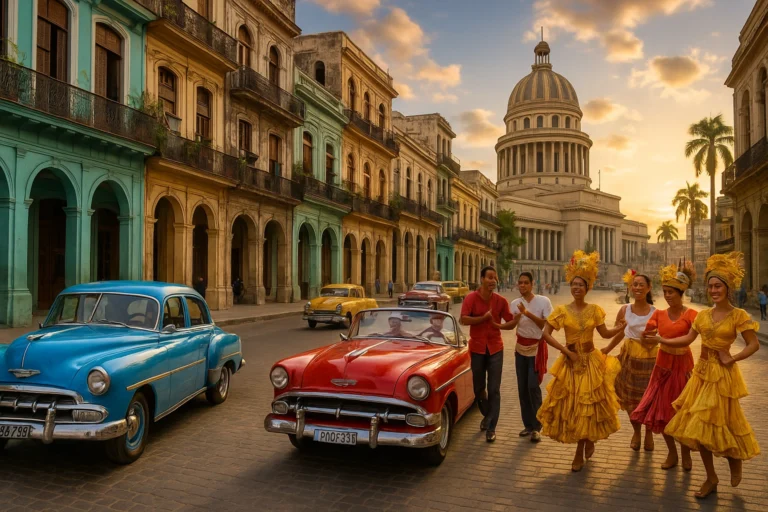 Cuba
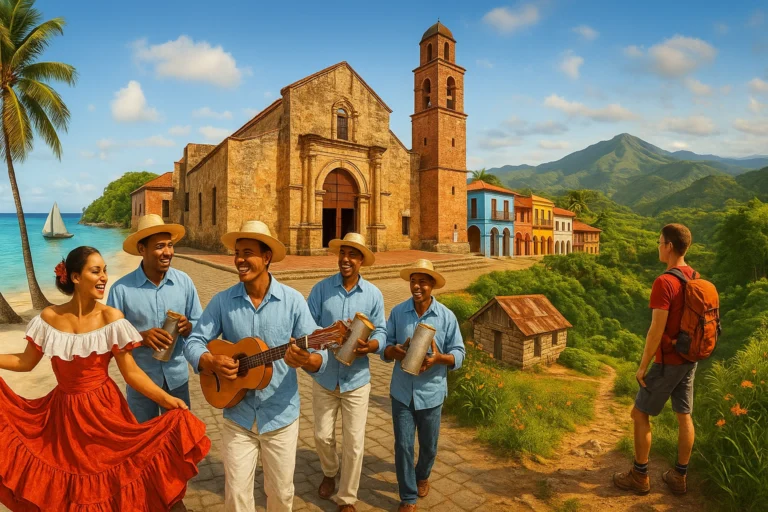 Dominican Republic
 Jamaica
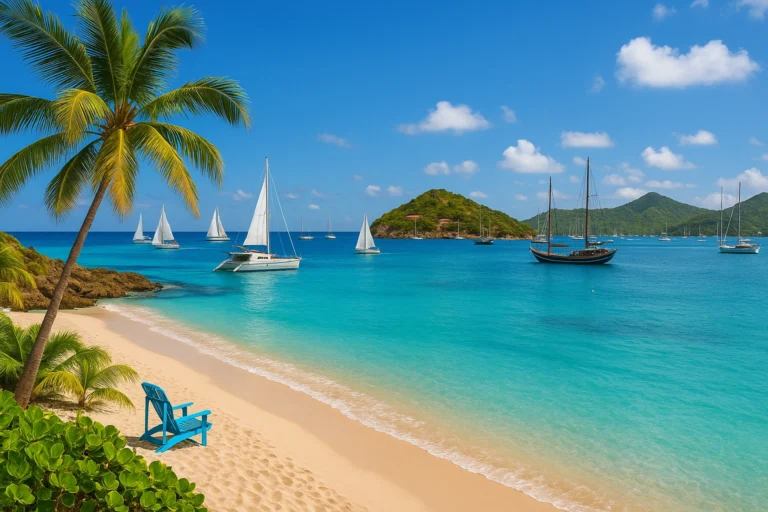 Antigua and Barbuda
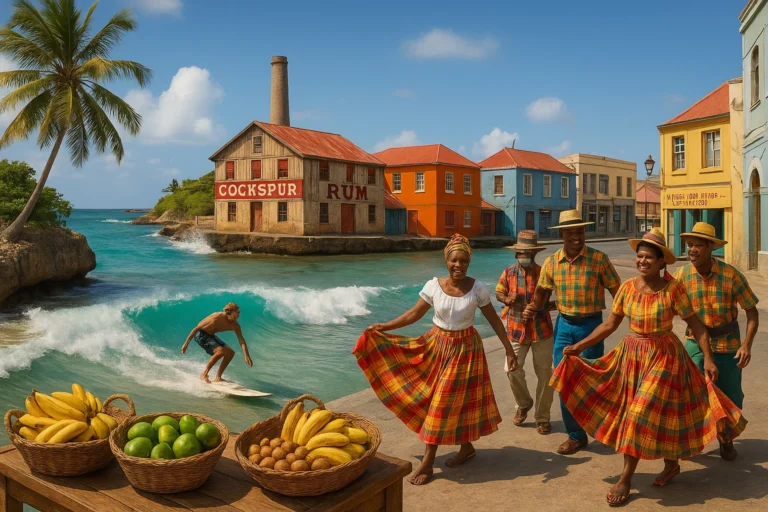 Barbados