Djibouti: A Crossroads of Cultures and Traditions
A tiny country at the mouth of the Red Sea, with extraordinary marine life, surreal salt lakes, and a strategic location that makes it unlike anywhere else in East Africa.
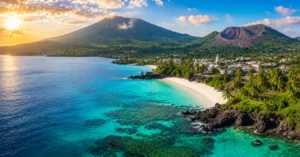
Djibouti is one of the smallest countries in Africa, a tiny territory at the strategic point where the Red Sea meets the Gulf of Aden, making it one of the most important maritime passages in the world. It borders Ethiopia to the west, Eritrea to the north, and Somalia to the south, with Somaliland to the southwest.
Despite its small size, Djibouti has remarkable natural attractions. The country sits on the East African Rift System where three tectonic plates meet, creating a geology of volcanic rock, hot springs, and some of the most extreme landscapes on earth.
Lake Assal and Lake Abbe
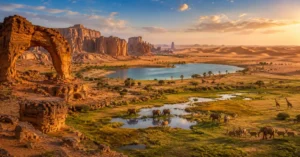
Lake Assal is the lowest point in Africa, more than 155 meters below sea level, and the third lowest point on earth after the Dead Sea and the Sea of Galilee. Its waters are ten times saltier than the ocean and are surrounded by a crust of brilliant white crystallized salt that shimmers in the desert heat. The surrounding landscape of black volcanic rock and salt white lake edge is completely otherworldly and genuinely unlike anywhere else in Africa.
Lake Abbe, on the Ethiopian border, is an even more extraordinary landscape. Hundreds of limestone chimneys, some reaching 50 meters in height, rise from a steaming, mineral-rich lake bed where hot springs bubble up from the earth. Flamingos wade through the shallow edges of the lake. The overall effect is a landscape that looks like the surface of another planet. The lake was the filming location for the original Planet of the Apes in 1968, and it is easy to see why the location was chosen.
Whale Sharks in the Gulf of Tadjoura
The Gulf of Tadjoura and the surrounding waters are one of the best places in the world to swim with whale sharks. Between November and February, whale sharks gather in the Bab-el-Mandeb Strait to feed on fish eggs released during mass spawning events, and the density of sharks during this period is extraordinary. Organized snorkeling and diving trips to swim with these enormous but completely harmless filter-feeders operate from Djibouti City during the season.
Whale sharks can reach up to 12 meters in length and are the largest fish in the ocean. Swimming alongside one in open water is an experience that requires no wildlife knowledge to appreciate. The Gulf of Tadjoura is consistently cited as one of the best accessible locations in the world for reliable whale shark encounters.
Djibouti City
Djibouti City, the capital, is a compact, multicultural port city of about 600,000 people with a strong French colonial influence visible in its wide boulevards, cafes, and administrative buildings. The city has a distinctive character shaped by its position as a transit hub for the entire Horn of Africa region.
The Central Market is a lively place where the diverse population of the city mixes freely, with Somali, Afar, Yemeni, Ethiopian, and French influences all visible in the goods on sale and the faces of the traders. The Hamoudi Mosque, with its ornate minaret, and the Ethiopian Orthodox Medhane Alem Cathedral reflect the city’s religious diversity.
The Sherif Restaurant and the numerous small restaurants around the port serve excellent Djiboutian food influenced by Yemeni, Somali, and French cooking. Fresh fish and seafood from the Gulf are outstanding.
The Goda Mountains and the Day Forest
The Goda Mountains in the north of the country rise to over 1,700 meters and support the Day Forest, one of the last remaining fragments of highland juniper forest in the Horn of Africa. The forest is home to the critically endangered Djibouti francolin, a ground-dwelling bird found only in Djibouti and one of Africa’s rarest birds.
The cooler temperatures of the Goda Mountains provide relief from the extreme heat of the coast and lowlands, and the drive north from Tadjoura through the mountains offers some of the most varied scenery in the country.
Practical Travel Tips for Djibouti
Most nationalities can get a visa on arrival at Djibouti-Ambouli International Airport or an e-visa online before travel. The official languages are French and Arabic. The Djiboutian franc is pegged to the US dollar, which is widely accepted. The best time to visit for whale sharks is October to February. Summers are extremely hot with temperatures regularly exceeding 40 degrees Celsius. The country is generally considered safe for travelers.