Comoros: Islands of Culture and Harmony
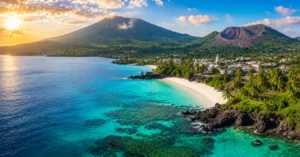
The Comoros are a group of four main islands in the Indian Ocean, sitting between the northern tip of Madagascar and the coast of Mozambique. Three islands form the Union of the Comoros: Grande Comore (Ngazidja), Anjouan (Nzwani), and Moheli (Mwali). The fourth island, Mayotte, is a French overseas territory.
The islands are volcanic and green, rising steeply from the sea. Grande Comore has an active volcano, Mount Karthala, one of the largest active volcanoes in the world, which last erupted significantly in 2005. The landscape around the volcano is dramatic and the crater itself, when accessible, is enormous.
The Comoros have had a turbulent political history with numerous coups and ongoing instability. Infrastructure is limited and tourism is minimal. But for travelers who reach them, the islands offer some remarkable experiences.
Why Visit Comoros
The marine environment is exceptional. The waters around Moheli, in particular, are protected within a Marine Park that encompasses some of the best coral reefs in the western Indian Ocean. Green turtles nest on Moheli’s beaches between November and February, and snorkeling and diving on the reefs is outstanding.
Coelacanths, a fish species thought to have been extinct for 65 million years before one was caught off the Comoros coast in 1938, live in the deep waters around the islands. This discovery was one of the most sensational in 20th-century natural history, and the Comoros have adopted the coelacanth as a national symbol. The Museum of the Coelacanth in Moroni tells the story of the discovery and its significance.
The old port town of Moroni on Grande Comore has a beautiful Swahili old quarter with narrow streets, a Friday mosque dating to the 15th century, and an Arab-Swahili architectural style that reflects the islands’ long history as a trading crossroads between the African coast, the Arabian Peninsula, and the Indian Ocean world.
Ylang-ylang, the flower used in high-end perfumery worldwide, is distilled in large quantities in the Comoros, particularly on Anjouan. The smell of the distilleries and the plantations is extraordinary, and a visit to see the traditional distillation process is a genuinely unusual experience that is hard to replicate anywhere else in the world. The Comoros produces around 80 percent of the world’s ylang-ylang supply.
The islands are also home to the Livingstone’s fruit bat, one of the largest bats in the world with a wingspan of up to 1.4 meters, found only in the Comoros. Conservation programs are working to protect the species from hunting and habitat loss.
Hiking and Landscape
Mount Karthala on Grande Comore is one of the most active volcanoes in Africa and can be hiked to the crater rim on a two-day trek. The route passes through cloud forest, with views over the island and the surrounding ocean as you ascend. The summit area is an otherworldly landscape of volcanic rock and steam vents around one of the largest active calderas in the world.
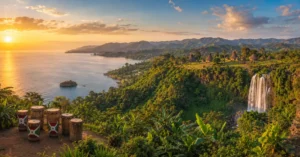
The interior of Anjouan is a landscape of steep hillsides covered in fragrant clove and ylang-ylang plantations, with waterfalls, old stone towns, and views out over the Indian Ocean. The town of Domoni on Anjouan is one of the oldest settlements in the Comoros and retains a beautiful old stone quarter with narrow alleys and carved wooden doors in the Swahili coastal tradition.
Food and Culture
Comorian cuisine combines African, Arab, and French influences. Rice, fish, and coconut are the foundations of the diet. Langouste (spiny lobster) is plentiful and excellent. Pilau rice with spiced meat, mkatra foutra flatbread, and banana fritters are local staples. The culture is predominantly Muslim, and the call to prayer echoes across the islands several times a day.
Practical Travel Tips for Comoros
Most nationalities can get a visa on arrival at Prince Said Ibrahim International Airport on Grande Comore. The official languages are Comorian, Arabic, and French. The Comorian franc is the currency. The best time to visit is May to October during the cooler dry season. Malaria prevention is recommended. Political instability requires monitoring before travel. Direct flights connect the islands to Madagascar, Kenya, Tanzania, and Reunion.