Angola: A Nation of Resilience and Cultural Wealth
Angola sits on the Atlantic coast of southern Africa, bordered by the Democratic Republic of Congo to the north, Zambia to the east, and Namibia to the south. It is a large country with a surprisingly varied landscape: tropical rainforests in the north, dry savannas in the east and south, a dramatic Atlantic coastline in the west, and the highlands of Huila and Bie in the center.
Angola spent nearly three decades in a devastating civil war that ended in 2002. Since then, it has been rebuilding, and its capital Luanda has transformed into one of the most expensive and rapidly modernizing cities in Africa. Tourism remains underdeveloped, which means the country is genuinely difficult to explore but genuinely rewarding for those who put in the effort.
Why Visit Angola
Angola is a country that most travelers have not considered and that very few have actually visited. That in itself is a compelling reason to go. You will find places here that have had almost no meaningful tourist presence, wildlife areas that were emptied during the war and are slowly recovering, and a culture that is rich, complex, and almost entirely unexplored in travel literature.
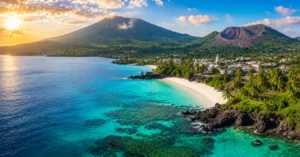
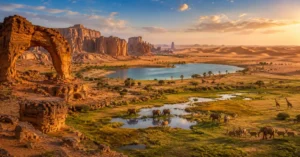
The Angolan coast is one of the most underrated in Africa. The beaches around Luanda are busy and local-flavored. But further south, near Namibe and toward the Namibian border, the coastline becomes dramatic and wild. The Namibe Desert meets the Atlantic here, creating a landscape of dunes and fog banks that looks like something from the edge of the world.
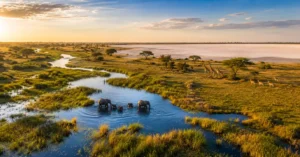
Kissama National Park, about 70 kilometers south of Luanda, is one of the most accessible wildlife destinations in the country. It was decimated during the civil war but has been restocked through a remarkable operation called “Noah’s Ark” that brought animals from South Africa and Zimbabwe.
Today the park has elephants, buffalo, zebra, sable antelope, and a growing population of other wildlife. It is not Kruger or the Serengeti, but it is improving steadily and represents one of Africa’s more interesting conservation stories.
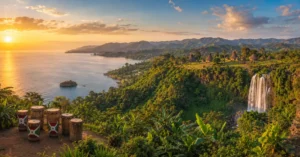
The Kalandula Falls in the north are one of the most impressive waterfalls in Africa. At nearly 105 meters high and 400 meters wide, they are significantly larger than Victoria Falls in volume during the rainy season. Very few international travelers have visited them.
The highlands of Huila Province in the south offer a completely different side of Angola. The town of Lubango sits at over 1,700 meters elevation, with a cool climate and remarkable colonial architecture. Nearby is the Tundavala Gorge, where the highlands drop nearly a kilometer to the plains below in a dramatic escarpment that stretches for miles.
Luanda and Angolan Culture
Luanda is a complicated city. It is expensive, traffic-choked, and unequal in ways that can be jarring. But it also has a genuine energy, excellent seafood, a vibrant music scene rooted in semba and kuduro, and a number of worthwhile museums and cultural institutions.
The Fortaleza de Sao Miguel, a Portuguese colonial fort built in the 16th century, offers both historical context and panoramic views over the bay. The Iron Palace, a cast-iron building assembled from prefabricated parts shipped from Portugal, is one of the most unusual colonial-era buildings in Africa.
Angola’s food reflects its Portuguese colonial heritage mixed with Central African traditions. Muamba de Galinha, a chicken stew cooked with palm oil and okra, is one of the national dishes. Caldeirada de peixe, a fish stew with Portuguese roots, is excellent along the coast. Angolan beer, particularly Cuca, is enjoyed everywhere.
Practical Travel Tips for Angola
Angola requires a visa for most nationalities, and the application process has historically been one of the more difficult in Africa. This has been improving, and online visa options have expanded in recent years. Check current requirements carefully.
Luanda is one of the most expensive cities in Africa, and budget travel is genuinely difficult. Most visitors stay in mid-range to upscale accommodation. Portuguese is the official language and is spoken widely. The Angolan kwanza is the currency, and cash is essential in most situations outside Luanda. The best time to visit is the dry season from May to October.