Palau: A Land of Ocean Wonders and Timeless Traditions
Palau, a stunning island nation in the western Pacific Ocean, is celebrated for its crystal-clear waters, coral reefs, and rich cultural heritage. Comprising over 500 islands, Palau spans an area of about 466 square kilometers and is part of the Micronesia region. The archipelago is surrounded by the Philippine Sea and shares maritime borders with Indonesia and the Federated States of Micronesia. Known for its pristine marine environment, Palau is a global leader in ocean conservation and eco-tourism, attracting divers and travelers from around the world who seek its natural beauty and vibrant culture.
Ancient Legacy and Historical Significance
Palau’s history stretches back more than 3,000 years, with its earliest inhabitants believed to have migrated from Southeast Asia. The islanders developed complex social structures and navigation techniques, allowing them to thrive across the scattered islands. Traditional villages were governed by chiefs and councils, emphasizing cooperation and respect for nature.
European contact began in the 16th century when Spanish explorers arrived, and Palau became part of the Spanish East Indies. After Spain’s defeat in 1898, the islands were sold to Germany, and later, Japan took control during World War I. During World War II, Palau became a strategic military site and witnessed significant battles between Japanese and American forces.
Following the war, Palau came under United States administration as part of the Trust Territory of the Pacific Islands. After years of negotiation and nation-building, Palau gained full independence in 1994 under a Compact of Free Association with the United States, marking the start of its modern era as a sovereign nation.
Cultural Traditions and Cuisine
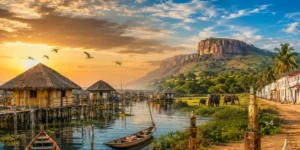
Palauan culture is deeply rooted in community, respect for elders, and harmony with nature. Traditional meeting houses known as bai are central to social life, adorned with carvings that depict legends and ancestral stories. Music and dance play a vital role in celebrations, with performances reflecting both historical narratives and daily life.
Festivals such as Independence Day and Constitution Day highlight national pride, while village gatherings preserve ancient customs and crafts. Clothing in Palau varies from traditional grass skirts and headbands used in ceremonies to contemporary island wear suited for the tropical climate.
Palauan cuisine reflects its oceanic setting, featuring fresh seafood, taro, breadfruit, and coconut. Dishes like ulkelal (taro pudding) and grilled fish are local favorites.
Palau remains a jewel of the Pacific, where cultural heritage, natural splendor, and environmental stewardship come together in perfect balance.