
Dominica
Dominica: The Nature Island of the Caribbean
Dominica is a breathtaking island nation located in the Eastern Caribbean between Guadeloupe to the north and Martinique to the south. Covering about 750 square kilometers, it is known as “The Nature Island” for its lush rainforests, towering mountains, and countless rivers and waterfalls. The island is home to the Morne Trois Pitons National Park, a UNESCO World Heritage Site that features volcanic landscapes and the famous Boiling Lake. Dominica stands apart from its Caribbean neighbors for its unspoiled beauty, eco-tourism, and the enduring presence of the Kalinago people, the island’s Indigenous inhabitants.
Ancient Legacy and Historical Significance
Before European colonization, Dominica was settled by the Kalinago (Carib) people, who named it
Wai’tu kubuli
, meaning “Tall is her body.” The island was discovered by Christopher Columbus in 1493, who named it Dominica because he sighted it on a Sunday. The Kalinago fiercely resisted European colonization, and as a result, Dominica was one of the last Caribbean islands to be colonized.
France claimed the island in the 17th century and established plantations using enslaved Africans. Control of Dominica shifted multiple times between France and Britain during the 18th century until it became a British colony in 1805. Enslaved Africans were emancipated in 1834, and their descendants now make up the majority of the population. Dominica achieved full independence from Britain on November 3, 1978. Today, it is a proud republic and a member of the Commonwealth, celebrated for its natural resilience and cultural unity.
Cultural Traditions and Cuisine
Dominican culture is a vibrant mix of African, European, and Indigenous influences, shaped by a strong connection to nature and community life. The Kalinago people maintain their traditions through crafts, language, and ceremonies in the Kalinago Territory on the island’s east coast. Music and dance are essential to Dominican life, with genres like
bouyon
,
cadence-lypso
, and
reggae
filling local festivals. The World Creole Music Festival and Carnival bring together colorful costumes, rhythmic drumming, and joyful celebrations.
Dominican cuisine reflects the island’s fertile land and rich cultural blend. Popular dishes include
mountain chicken
(a local delicacy made from frog legs),
callaloo soup
,
pelau
(rice cooked with meat and vegetables), and fresh seafood. Fruits such as mangoes, papayas, and coconuts are enjoyed daily.
Dominica is a land of vibrant culture, stunning natural wonders, and enduring traditions, offering a true reflection of Caribbean spirit and ecological harmony.
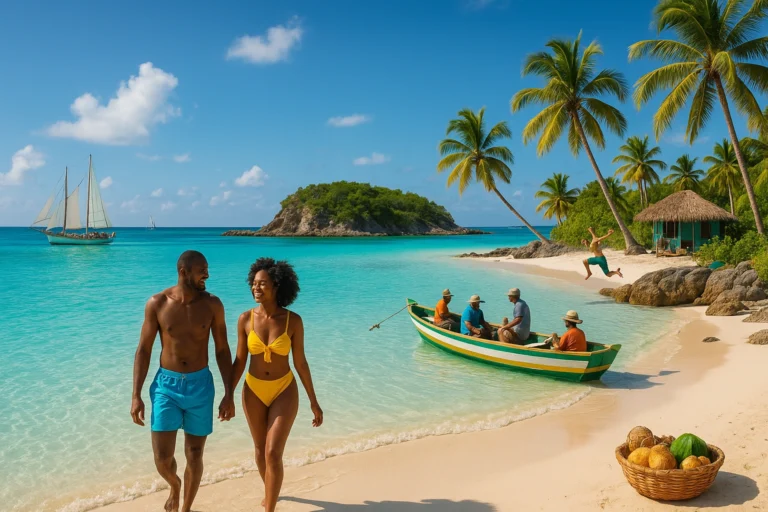 Bahamas
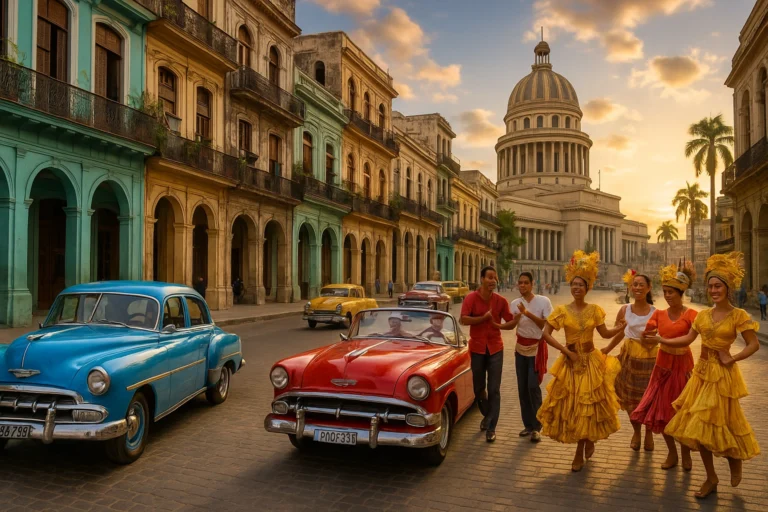 Cuba
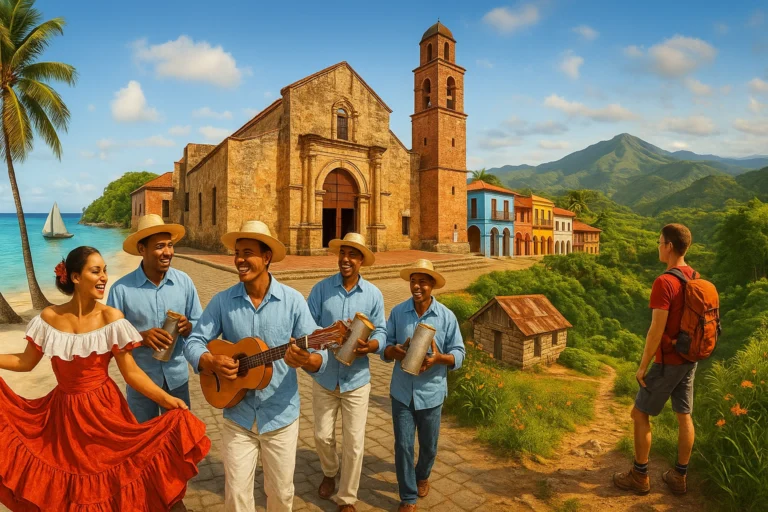 Dominican Republic
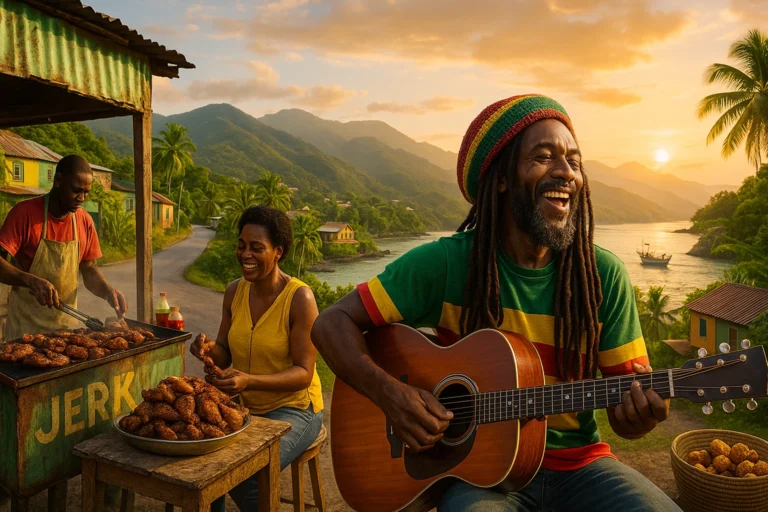 Jamaica
 Antigua and Barbuda
 Barbados