The Central African Republic is one of the most remote and least visited countries on Earth. If you are searching for the best places to visit in the Central African Republic, you will find a country of extraordinary untouched wilderness, rare wildlife and genuine off-the-grid adventure. From lowland gorilla tracking in the Dzanga-Sangha Reserve to the cascading Boali Falls and the cultural life of the capital Bangui, CAR offers experiences that almost no other traveler has had. This guide covers the top destinations, key safety information and everything you need to consider before planning a trip in 2026.
Table of Contents
Why Visit the Central African Republic?
1. Untouched Wilderness and Biodiversity
Central African Republic sits at the heart of the Congo Basin, the second largest tropical rainforest on Earth. Vast stretches of this forest remain completely untouched by development or tourism. The biodiversity here is extraordinary, with ecosystems that have been largely undisturbed for thousands of years. For travellers who want wilderness in its most raw and uncompromised form, CAR is one of the last places on Earth where that is still possible.
2. Rare Wildlife Experiences
CAR (Central African Republic) is home to some of the rarest wildlife encounters available to any traveller. Western lowland gorillas, forest elephants, bongo antelope, forest buffalo and hundreds of bird species live in the dense rainforests of the southwest. Dzanga Bai, a forest clearing in the Dzanga-Sangha Reserve, is considered one of the best places in the world to observe large numbers of forest elephants in their natural habitat.
3. Authentic Off-the-Beaten-Path Travel
Very few international tourists visit the Central African Republic each year. Those who do come almost exclusively for the wildlife. There is no mass tourism infrastructure, no tourist crowds and no commercialised version of the culture. Everything here is genuine and unfiltered, which is both the greatest appeal and the greatest challenge of visiting.
6 Best Places to Visit in the Central African Republic
1. Bangui – Cultural and Urban Centre
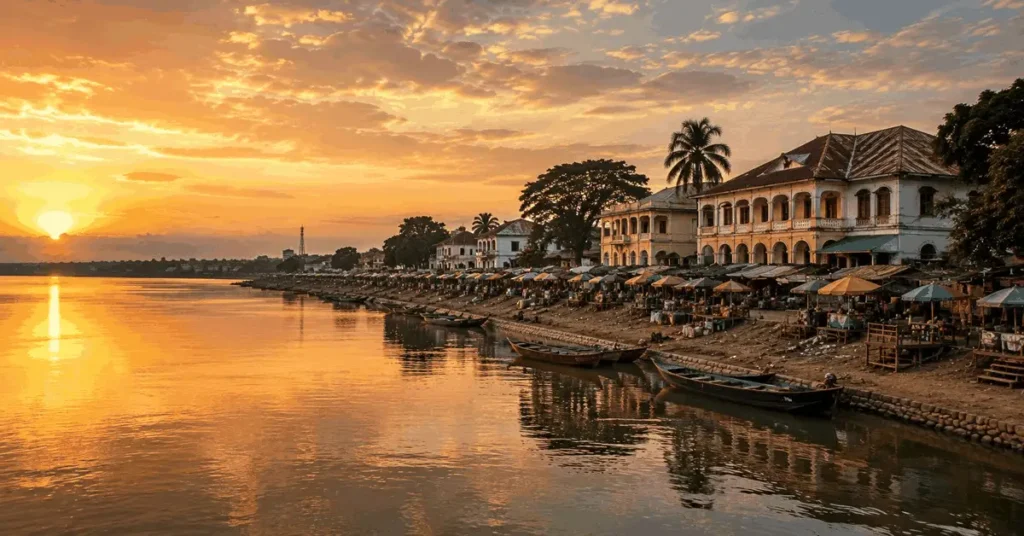
Bangui is the capital and largest city of the Central African Republic, sitting on the northern bank of the Ubangi River. The city has a French colonial past that is visible in some of its architecture, and a lively everyday culture centered around its markets and riverside areas.
The Bangui Central Market is one of the most colourful and active in the country, where vendors sell fresh produce, textiles, crafts and local goods. The riverfront along the Ubangi offers views across the water to the Democratic Republic of Congo on the opposite bank. Bangui is the entry point for almost all international visitors and serves as the base for organising travel deeper into the country.
Key highlights of Bangui:
- Bangui Central Market for local food, crafts and everyday culture
- Ubangi River waterfront for scenic views and riverside walks
- Notre Dame Cathedral, a landmark of French colonial architecture
- Local restaurants serving Cameroonian and Central African cuisine
- Main base for organising guided tours to reserves and parks
2. Dzanga-Sangha Special Reserve – Wildlife and Rainforest Experience
Dzanga-Sangha is the most important and most visited wildlife destination in the Central African Republic. Located in the far southwest, where the borders of CAR, Cameroon and the Republic of Congo meet, the reserve is part of the Sangha Trinational World Heritage Site. It covers over 3,000 square kilometres of dense lowland rainforest and is managed in partnership with WWF.
The reserve offers two extraordinary wildlife experiences. Western lowland gorilla tracking takes visitors through dense forest to observe habituated gorilla families at close range. Dzanga Bai is a large forest clearing where mineral-rich water attracts groups of forest elephants every day. Sitting in a quiet observation platform watching dozens of elephants interact in a remote jungle clearing is one of the most remarkable wildlife experiences available anywhere in the world.
Key highlights of Dzanga-Sangha Special Reserve:
- Western lowland gorilla tracking with habituated family groups
- Forest elephant viewing at Dzanga Bai clearing
- Guided walks through dense Congo Basin rainforest
- Exceptional birdwatching with over 400 species recorded
- Part of the UNESCO Sangha Trinational World Heritage Site
3. Dzanga-Ndoki National Park – Pristine Rainforest
Dzanga-Ndoki National Park sits adjacent to the Dzanga-Sangha Reserve and together they form one of the most significant protected rainforest areas in Africa. The park covers approximately 1,220 square kilometres of primary rainforest that forms part of the larger Congo Basin ecosystem. It is home to western lowland gorillas, forest elephants, chimpanzees, leopards and an extraordinary diversity of plant life.
The park is more strictly protected than the reserve and access is limited, but it represents one of the most pristine and undisturbed patches of rainforest on the planet. Visiting requires a reputable guide and advance permits.
Key highlights of Dzanga-Ndoki National Park:
- One of the most biodiverse and undisturbed rainforests in Africa
- Western lowland gorilla and chimpanzee presence
- Part of the Congo Basin, the second-largest rainforest on Earth
- Extremely remote with very few visitors each year
- Strict access controls ensure the environment remains protected
4. Manovo-Gounda St Floris National Park – Savanna Wildlife
Manovo-Gounda St Floris National Park is a UNESCO World Heritage Site in the north of the Central African Republic. The park covers over 17,000 square kilometres of open savanna, floodplains and gallery forest and was once one of the most important wildlife areas in Central Africa. It is home to elephants, lions, leopards, cheetahs, black rhinoceros, buffalo and large herds of antelope, including kob and tiang.
The park has faced significant poaching pressure in recent decades and is currently listed as a UNESCO World Heritage Site in Danger. Visiting requires serious logistical planning, and the current security situation in the northern regions makes access very difficult. It remains on the list as a destination to watch for the future as conservation efforts continue.
Key highlights of Manovo-Gounda St Floris National Park:
- UNESCO World Heritage Site with vast savanna ecosystems
- Historically rich wildlife, including lions, leopards and elephants
- One of the largest national parks in Central Africa
- Currently requires a careful security assessment before visiting
- Important long-term conservation area for Central African wildlife
5. Boali Falls – Natural Landmark
Boali Falls is the most accessible natural attraction in the Central African Republic and one of the most impressive waterfalls in Central Africa. Located about 100 kilometres north of Bangui, the falls drop approximately 50 meters across a wide rocky face surrounded by green vegetation. The sight and sound of the falls at peak flow is dramatic and memorable.
The best time to visit is during or just after the rainy season from June to October, when the water volume is at its highest. The falls are accessible by road from Bangui and can be visited as a half-day or full-day trip, making them the easiest major natural attraction in the country to reach independently.
Key highlights of Boali Falls:
- One of the most impressive waterfalls in Central Africa
- Easy road access from Bangui, about 100 kilometres north
- Best visited from June to October for maximum water flow
- Good photography opportunities from the viewing areas
- Can be combined with a visit to a nearby hydroelectric station
6. Ubangi River – Scenic River Experience
The Ubangi River forms the southern border of the Central African Republic with the Democratic Republic of Congo. The river is wide, scenic and an important artery of transport and life for communities along its banks. Boat trips on the Ubangi offer a slow, peaceful way to experience riverside life, observe birdlife and see the forest landscape from a completely different perspective.
Key highlights of the Ubangi River:
- Scenic boat trips through riverside forest landscapes
- Birdwatching along the river banks and forested edges
- Views across to the Democratic Republic of Congo
- Riverside communities and traditional fishing culture
- Peaceful alternative to land-based travel in the region
Hidden Gems in the Central African Republic
1. Bamingui-Bangoran National Park – Remote Wilderness
Bamingui-Bangoran National Park in the north covers over 10,000 square kilometres of savanna and gallery forest. It is one of the least visited parks in Africa and remains genuinely wild. The park is home to elephants, lions, hippos and a wide variety of antelope. Access requires significant planning and a reliable local operator, but for serious expedition travelers it represents one of the most remote safari experiences available anywhere.
2. Sangha River – Jungle Exploration
The Sangha River runs through the southwest of CAR and forms the boundary between the country and the Republic of Congo. Canoe trips along the Sangha take you through dense, untouched rainforest with opportunities to spot wildlife along the banks. The experience of paddling slowly through the jungle in near silence is one of the most immersive nature experiences available in Central Africa.
Is It Safe to Visit the Central African Republic?
This is the most important question any traveller considering a car must answer honestly before booking anything.
Central African Republic has experienced serious political instability and armed conflict in recent years. Multiple Western governments, including the United States, United Kingdom, France and Australia, currently advise against all travel or all but essential travel to most parts of the country. Armed groups operate in large areas of the north, centre, and east of the country. The situation can change rapidly.
The areas that have maintained a level of controlled, supervised tourism are primarily the Dzanga-Sangha Reserve in the southwest and the immediate area around Bangui. These areas are managed by international conservation organisations and have an established infrastructure for guided visits.
Important safety points:
- Check your government’s official travel advisory immediately before booking and before departure
- Only visit through a reputable, internationally recognised tour operator with current on-the-ground knowledge
- Never travel independently outside Bangui without an experienced local guide
- Register with your country’s embassy in Bangui upon arrival
- Avoid all travel to the northern, central and eastern regions of the country
- Have a clear emergency evacuation plan before you arrive
CAR (Central African Republic) is not a destination for casual travellers. It is a destination for experienced expedition travellers who understand and accept the risks involved and travel with proper professional support.
Best Time to Visit the Central African Republic
1. Dry Season: December to March
The dry season offers the best road conditions and most comfortable travel. Wildlife viewing in savanna areas is easier as the vegetation is lower and animals concentrate around water sources. This is the recommended time for most visits.
2. Rainy Season: June to October
Heavy rain makes many roads impassable and travel outside main areas very difficult. However, the forest is lush, waterfalls including Boali are at their most impressive and birdwatching is excellent. The Dzanga-Sangha Reserve remains accessible year-round.
3. Wildlife Viewing Timing
- Forest elephants at Dzanga Bai: year-round, best in dry season
- Gorilla tracking: year-round at Dzanga-Sangha
- Savanna wildlife: November to March in northern parks
- Boali Falls: June to October for peak water flow
Travel Tips for Visiting the Central African Republic
1. Visa Requirements
Most nationalities need a visa to enter the Central African Republic. There is no widely available eVisa system, and most travellers must apply through a CAR embassy or consulate before departure. You will need a valid passport with at least six months remaining, a return flight booking, passport photos, proof of accommodation and a yellow fever vaccination certificate, which is mandatory for entry. Processing can take several weeks, so apply well in advance.
2. Getting Around
Getting around the Central African Republic is one of the most logistically challenging aspects of any visit. Road infrastructure outside Bangui is extremely limited. Many roads become impassable during the rainy season. Domestic flights are limited and unreliable.
- All travel outside Bangui should be arranged through a reputable guided tour operator
- The Dzanga-Sangha Reserve has its own light aircraft access from Bangui
- River transport on the Ubangi and Sangha rivers is available for some routes
- Never attempt self-drive travel in remote areas
- Satellite communication devices are strongly recommended for remote travel
3. Currency and Costs
The official currency is the Central African CFA franc (XAF), shared with five other Central African countries and pegged to the euro. CAR is an expensive destination despite being one of the poorest countries in the world. The high costs reflect the extreme logistical challenges of operating tourism in such a remote and underdeveloped environment.
- Budget a minimum of $200 to $300 USD per day for guided travel, including accommodation and activities
- Gorilla tracking permits at Dzanga-Sangha cost several hundred dollars
- Cash in XAF or euros is essential as card payments are extremely limited
- All-inclusive guided packages are the most practical option for cost management
- Carry more cash than you think you need as ATMs are unreliable even in Bangui
Suggested 5 to 7 Day Itinerary (Advanced Travellers Only)
Sample Day-by-Day Breakdown
| Day | Destination | Main Activities |
| Day 1 to 2 | Bangui | Central Market, Ubangi River waterfront, cultural orientation, logistics preparation |
| Day 3 to 5 | Dzanga-Sangha Reserve | Gorilla tracking, Dzanga Bai elephant viewing, forest walks, birdwatching |
| Day 6 | Boali Falls | Road trip north of Bangui, waterfall viewing, photography |
| Day 7 | Return to Bangui | Final preparations, departure flight |
Itinerary Tips:
- Book Dzanga-Sangha gorilla tracking permits well in advance through WWF or a licensed operator
- Arrange a light aircraft transfer from Bangui to Dzanga-Sangha to save time and avoid difficult roads
- Allow flexibility in your schedule as weather and logistics can cause unexpected delays
- Brief your travel insurance provider fully before departure as standard policies often exclude CAR
What is the Central African Republic Famous For?
1. Congo Basin Rainforest
CAR contains a significant portion of the Congo Basin, the second-largest tropical rainforest on Earth. The forests here are among the most biodiverse and least disturbed in the world.
2. Wildlife Including Gorillas and Elephants
CAR is one of the few places in the world where you can track western lowland gorillas and observe large groups of forest elephants in truly wild, undisturbed conditions. These are among the rarest and most sought-after wildlife experiences on the planet.
3. Remote Wilderness
The Central African Republic is famous among serious expedition travellers for being one of the most remote and genuinely wild destinations accessible to tourists. The near-total absence of tourism infrastructure means the wilderness is uncompromised.
FAQs About Visiting The Central African Republic
1. Is It Safe to Travel to CAR?
Significant parts of CAR are not safe for tourist travel. The southwest around Dzanga-Sangha and the capital Bangui have maintained a level of controlled access, but most of the country carries serious security risks. Always check your government’s official travel advisory and travel only with reputable, experienced operators.
2. Can Tourists Visit the Central African Republic?
Yes, tourism is possible, but only in specific areas and only through organised, guided trips. Independent travel is not recommended. The Dzanga-Sangha Reserve has an established tourism infrastructure that welcomes visitors with advance planning.
3. What Language is Spoken in CAR (Central African Republic)?
French and Sango are the two official languages of the Central African Republic. Sango is the national language spoken by the majority of the population as a common tongue. French is used in government, education and business. Many local ethnic languages are also spoken across the country.
4. Is CAR Expensive to Visit?
Yes, CAR is one of the more expensive destinations in Africa for tourists, not because of luxury but because of logistics. Guided tours, permit fees, charter flights and security considerations all add high cost. Budget a minimum of $200 to $300 USD per day for a properly organised and safe trip.
Map of the Central African Republic
Final Thoughts on Visiting the Central African Republic
The Central African Republic is not a destination for most travellers. It is a destination for a very specific kind of adventurous, experienced and well-prepared traveller who is drawn to extreme wilderness, rare wildlife and genuine expedition-style travel. The gorilla tracking at Dzanga-Sangha and the forest elephant spectacle at Dzanga Bai are among the most extraordinary wildlife experiences available anywhere on Earth. If you are the right kind of traveller, with realistic expectations, a reputable operator and a thorough understanding of the risks, CAR can deliver memories that last a lifetime. Go prepared, go with professionals and go with your eyes open.