Benin is one of the most culturally rich and underrated destinations in West Africa. If you are looking for the best places to visit in Benin, you will find a country full of deep history, living Voodoo traditions, incredible wildlife and charming coastal towns. From the sacred city of Ouidah to the stilt villages of Lake Nokoué, Benin offers travel experiences that feel completely unlike anywhere else on the continent. This 2026 guide covers everything you need to plan your trip, from top destinations and hidden gems to practical tips and a full itinerary.
Table of Contents
Why Visit Benin?
1. Birthplace of Voodoo Culture
Benin is where Voodoo was born. This ancient spiritual tradition is not a tourist attraction here. It is a living, practised religion that shapes daily life across the country. The Ouidah Voodoo Festival draws thousands of visitors every January and is one of the most extraordinary cultural events in all of Africa. Nowhere else in the world can you experience Voodoo in its original, unfiltered form.
2. Mix of History, Nature and Authentic Local Life
Benin packs an enormous amount into a small country. You can walk through the ruins of the powerful Dahomey Kingdom in the morning and go on a wildlife safari in the afternoon. Stilt villages, colonial ports, ancient palaces and tropical forests all exist within a few hours of each other. The people are warm, and the culture is genuine. There is very little that feels staged or commercialised here.
3. Less Touristy Than Neighbouring Countries
Compared to Ghana, Senegal or even Togo, Benin sees far fewer international visitors. That means you get authentic interactions, uncrowded sites and a real sense of discovery. Tourism infrastructure is growing but the country has not yet been overrun. Visiting now means experiencing Benin before the crowds arrive.
Best Places to Visit in Benin
1. Cotonou – The Gateway City
Cotonou is Benin’s largest city and economic capital, and it is where most international visitors arrive. The city is busy, loud and full of energy. The Dantokpa Market is one of the largest open-air markets in West Africa, where you can find everything from fresh produce and textiles to traditional medicines and handcrafted goods. It is an overwhelming but unforgettable experience.
Beyond the market, Cotonou has a growing restaurant and nightlife scene, decent beaches along the Atlantic coast and several cultural centres worth visiting. The city is best used as a two-day base before heading to Benin’s more historic and natural destinations.
2. Ouidah – Cultural and Historical Heart
Ouidah is the most historically significant city in Benin and one of the most important cities in the story of the transatlantic slave trade. The Slave Route is a walking trail that follows the path enslaved people were forced to walk from the city’s slave market to the coast. It ends at the Door of No Return, a powerful memorial arch that stands at the ocean’s edge and is one of Africa’s most moving landmarks.
Ouidah is also the spiritual capital of Voodoo. The Ouidah Voodoo Festival, held every January 10th, fills the city with ceremonies, music, dancing and rituals. The Python Temple, the Sacred Forest of Kpasse and several shrines make Ouidah a destination that stays with you long after you leave.
3. Ganvié – The Venice of Africa
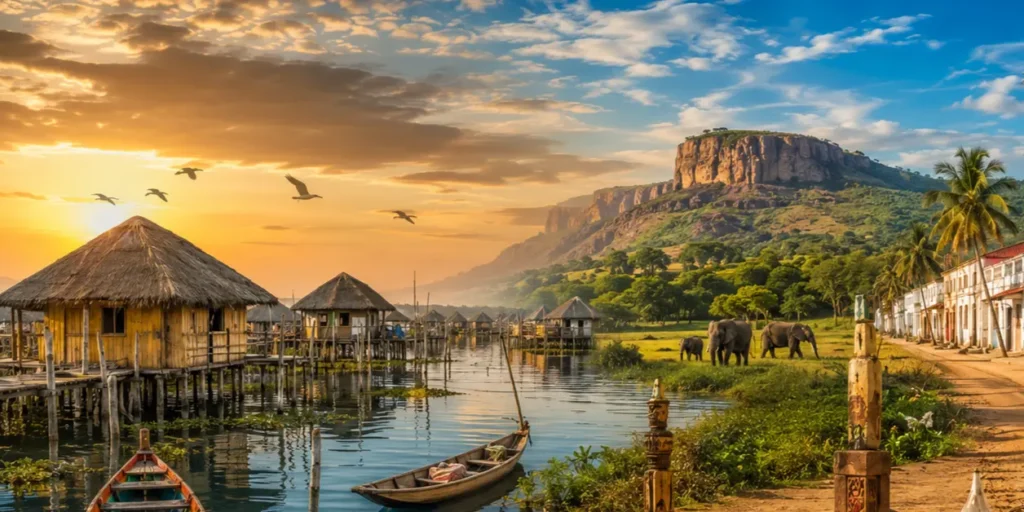
Ganvié is one of the most unusual and visually stunning places in all of West Africa. It is a village built entirely on stilts above Lake Nokoué, about 20 kilometres north of Cotonou. Around 30,000 people live here in homes, schools, markets and churches that all sit above the water. There are no roads and every journey in Ganvié is made by wooden canoe.
The village was originally built by the Tofinu people in the 17th century as a way to escape slave raiders, who were forbidden by tradition from crossing water. Boat tours of the village take you through narrow waterways between homes and give you a window into a way of life that has existed here for hundreds of years. Early morning visits are best for light and atmosphere.
4. Pendjari National Park – Wildlife Safari Destination
Pendjari National Park is the best wildlife destination in West Africa and one of Benin’s most impressive natural attractions. Located in the far northwest, near the borders of Burkina Faso and Togo, the park is part of the larger W-Arly-Pendjari (WAP) complex, the largest protected savanna ecosystem in West Africa.
Pendjari is home to elephants, lions, leopards, hippos, buffalo, baboons, crocodiles and over 460 bird species. Lion sightings have increased significantly in recent years thanks to conservation efforts led by African Parks. Safari drives are best in the dry season from November to May when animals gather around water sources.
Safari Tips for Pendjari:
- Book a guided safari because self-driving is not recommended
- Stay in one of the park’s eco-lodges for the best wildlife access
- Visit early morning and late afternoon for the most active wildlife
- Bring binoculars, sunscreen and long-sleeved clothing
5. Abomey – Kingdom of Dahomey
Abomey was the capital of the Dahomey Kingdom, one of the most powerful and feared kingdoms in West African history. The Royal Palaces of Abomey are a UNESCO World Heritage Site and one of the most important historical sites in all of Africa. The palace complex covers over 40 hectares and includes the remains of twelve royal palaces built by different kings between the 17th and 19th centuries.
The on-site museum holds a remarkable collection of artefacts, including royal thrones, bas-relief carvings, ceremonial weapons and royal regalia. The history of the Dahomey Kingdom, including its famous all-female warrior army called the Agojie, is told in striking detail. Abomey is a sobering, fascinating and deeply important destination.
6. Grand-Popo – Relaxing Beach Escape
Grand-Popo is a small coastal town near the border with Togo that offers something rare in West Africa: genuine peace and quiet. The beaches here are long, wide and largely empty. The town sits between the Atlantic Ocean and a series of calm lagoons, making it perfect for swimming, kayaking, and boat trips through the mangroves.
Grand-Popo has a handful of small guesthouses and beachfront restaurants that serve fresh grilled seafood. There is almost nothing to do here except relax, and that is exactly the point. It is the ideal destination for slow travellers who want to end their Benin trip with a few days of rest by the sea.
7. Natitingou – Gateway to the North
Natitingou is the main city in northern Benin and serves as the base for exploring the Atakora Mountains and Pendjari National Park. The city has a completely different feel from the coastal south. The air is cooler, the landscape is greener, and the cultural mix of ethnic groups, including the Betamaribé, Fulani and Bariba peoples, gives the region a unique character.
Natitingou has a good local market, a regional museum covering the cultures of the north and several comfortable guesthouses. It is a friendly, easy-going town that makes a great overnight stop on the way to or from Pendjari.
8. Boukoumbé – Traditional Tata Somba Houses
Boukoumbé is a small town in the Atakora region famous for the Tata Somba, traditional mud tower houses built by the Betamaribé people. These two-story structures are built entirely from mud and have a distinctive shape with small towers, thatched roofs, and narrow doorways designed to keep enemies out. Each home is essentially a small fortress.
Visiting Boukoumbé offers one of the most authentic cultural immersion experiences in Benin. Local families often welcome visitors to see their homes and explain how they live. The surrounding landscape of rolling hills and rocky outcrops is also beautiful for hiking and photography.
Hidden Gems in Benin
1. Lake Nokoué Villages Beyond Ganvié
While Ganvié gets most of the attention, Lake Nokoué has several other stilt communities that are rarely visited by tourists. Villages like So-Ava and Houédome offer a similar lifestyle to Ganvié but without the crowds. Hiring a local boatman to take you through these lesser-known communities gives you a more personal and unhurried experience. The lake at sunrise is especially beautiful, with fishing canoes moving silently through the mist.
2. Possotomé – Lake Ahémé Views
Possotomé is a quiet village on the shores of Lake Ahémé in southern Benin. It is almost entirely off the tourist trail, which makes it a genuinely peaceful retreat. The lake is calm and scenic, and local fishermen can take you out on the water in the early morning. There are a few simple guesthouses, and the surrounding area has good birdwatching. Possotomé is the kind of place where you arrive for one night and end up staying for three.
Best Time to Visit Benin
1. Dry Season: November to March (Best for Most Travel)
The dry season is the best overall time to visit Benin. The weather is comfortable, roads are easier to travel, and wildlife in Pendjari National Park is easier to spot since animals gather near water sources. This is the most popular time for safaris, sightseeing and coastal travel.
2. Rainy Season: April to October
The rainy season brings lush green landscapes, but some roads can become difficult to navigate, especially in rural and northern areas. Coastal towns, lake villages and urban destinations like Cotonou and Ouidah remain accessible year-round. If you do not mind occasional rain, the green scenery is beautiful, and accommodation prices are lower.
3. Voodoo Festival Timing: January 10th
The Ouidah Voodoo Festival is held every year on January 10th, which falls in the dry season. This is the best time to visit Ouidah if you want to experience the festival. Plan well in advance because accommodation in Ouidah and Cotonou books up quickly around this date.
4. Wildlife and Seasonal Timing
- For wildlife at Pendjari: visit from November to May
- For lush landscapes and greenery, visit June to September
- For beaches and coastal towns: any time of year works, though November to March is most comfortable
Things to Know Before Visiting Benin
1. Visa Requirements
Most nationalities need a visa to enter Benin. Benin offers an eVisa system that lets you apply online before your trip at the official government portal. You will need a valid passport with at least six months remaining, a return flight booking, proof of accommodation and a recent passport photo. Processing typically takes two to five business days. Apply at least one week before your departure, and always check the latest requirements with your nearest Beninese embassy before travelling.
2. Is Benin Safe for Tourists?
Benin is one of the more stable and safe countries in West Africa. The main tourist areas, including Cotonou, Ouidah, Ganvié and Abomey, are generally safe for travellers. Violent crime against tourists is rare, though petty theft can occur in crowded markets and busy city areas.
Safety Tips:
- Keep valuables out of sight in busy market areas
- Use licensed taxis or hotel-arranged transport in Cotonou
- Avoid travelling after dark in unfamiliar areas
- The far north near the Burkina Faso border has occasional security concerns, so always check current travel advisories
- Register your trip with your country’s embassy or travel advisory service
3. Getting Around Benin
Getting around Benin requires some flexibility. Moto taxis called zémidjans are the most common form of local transport and are cheap and widely available in every city and town. For longer distances, shared bush taxis and minibuses connect most major destinations. Hiring a private driver is the most comfortable and efficient option, especially for multi-day trips to Pendjari or the north.
Getting Around Tips:
- Moto taxis are fast and affordable for short trips, so always negotiate the price before getting on
- Private drivers can be arranged through most hotels and guesthouses
- Roads between major cities are generally paved, but the quality varies
- A 4×4 vehicle is strongly recommended for the Pendjari and northern regions
4. Currency and Costs
The official currency is the West African CFA franc (XOF), which is used across eight countries in West Africa and is pegged to the euro. ATMs are available in Cotonou and other major cities, though less reliable in rural areas. Carry sufficient cash when travelling outside the capital.
Budget Expectations:
- Budget travellers can get by on $40 to $60 USD per day, including accommodation, food and local transport
- Mid-range travellers should budget $80 to $120 USD per day
- Pendjari safaris and guided tours cost more but offer excellent value
- Credit cards are accepted in some Cotonou hotels and restaurants, but cash is preferred everywhere else
Suggested 7 to 10 Day Benin Itinerary
This route covers Benin’s top highlights and can be a 7-day trip or extended to 10 days. It moves from the coast northward, then loops back for departure.
Sample Day-by-Day Breakdown
| Day | Destination | Main Activities |
| Day 1 to 2 | Cotonou | Explore Dantokpa Market, visit the beaches, enjoy local food and nightlife |
| Day 3 | Ouidah | Walk the Slave Route, visit the Door of No Return, explore the Python Temple and Sacred Forest |
| Day 4 | Ganvié | Morning boat tour of the stilt village, explore Lake Nokoué, optional visit to So-Ava village |
| Day 5 to 6 | Abomey | Royal Palaces of Dahomey (UNESCO), palace museum, local craft markets |
| Day 7 to 9 | Pendjari National Park | Guided safari drives, elephant and lion sightings, overnight in park eco-lodge |
| Day 10 | Return to Cotonou | Guided safari drives, elephant and lion sightings, and an overnight in a park eco-lodge |
Itinerary Tips:
- Book Pendjari safari accommodation well in advance during peak season
- Hire a private driver for the Abomey to Natitingou leg, as it is a long drive
- Allow extra time in Ouidah if your visit falls around January 10th for the Voodoo Festival
- Combine Grand-Popo with Ouidah, as both are along the same coastal road
What is Benin Famous For?
1. Voodoo Religion
Benin is the birthplace of Voodoo, a spiritual tradition practised by over 17 per cent of the population. The Ouidah Voodoo Festival is one of the most significant cultural events in Africa and draws visitors from around the world every January. Unlike how Voodoo is often portrayed in popular culture, in Benin, it is a deeply respected and complex spiritual system.
2. Dahomey Kingdom History
The Kingdom of Dahomey was one of the most powerful states in West African history, known for its military strength, royal art, and the famous Agojie, an all-female warrior army that inspired the film The Woman King. The Royal Palaces of Abomey are a UNESCO World Heritage Site and one of the most visited historical attractions in West Africa.
3. Wildlife Parks
Pendjari National Park is the best wildlife destination in West Africa. As part of the W-Arly-Pendjari complex, it protects one of the last populations of lions, elephants and leopards in the region. Conservation efforts led by African Parks have made Pendjari a major success story and a model for wildlife management in Africa.
FAQs About Visiting Benin
Is Benin Worth Visiting?
Yes, absolutely. Benin is one of the most culturally unique destinations in West Africa. It has the birthplace of Voodoo, UNESCO-listed royal palaces, a village built on water, one of the best wildlife parks in the region and some of the warmest hospitality you will find anywhere on the continent. For travellers who want something genuine and off the beaten path, Benin is absolutely worth visiting.
Do I Need a Visa for Benin?
Most nationalities need a visa to enter Benin. An eVisa is available online through the official government portal and is the easiest option for most travellers. Apply at least one week before your trip. Visa requirements can change, so always confirm the latest information with the Beninese embassy or the official eVisa website before travelling.
What Language is Spoken in Benin?
French is the official language of Benin and is widely spoken in cities, schools, government offices and tourist areas. There are also over fifty local languages spoken across the country, including Fon, Yoruba, Bariba and Dendi. Learning a few basic French phrases will make a big difference, especially outside the main cities.
Is Benin Expensive to Travel?
Benin is generally affordable compared to many other travel destinations. Budget travellers can get by on $40 to $60 USD per day for basic accommodation, local food, and moto-taxi transport. Mid-range travellers spending $80 to $120 USD per day will be very comfortable. Pendjari safari packages and private guided tours will add to the cost but are worth the investment.
Map of the Benin
A map helps travellers understand the north-to-south layout of Benin and plan an efficient route between destinations. The country is compact enough to cover most major sites in 7 to 10 days with good planning.
Final Thoughts on Visiting Benin
Benin is a destination that rewards curious travellers with experiences that feel completely authentic. There are no theme-park versions of history here. The slave route is real, the Voodoo is real, the stilt villages are lived-in communities, and the wildlife in Pendjari is wild and unscripted.
What makes Benin truly special is that it has not yet been discovered by mass tourism. You can walk through a UNESCO World Heritage site without a crowd, take a boat through a water village without another tourist in sight and attend a ceremony that has been practised for centuries without it feeling like a performance.
If you are looking for off-the-beaten-path Africa in 2026, Benin belongs at the top of your list. Go now, while it still feels like a secret.