
Egypt
Egypt: A Cradle of Civilization and Timeless Culture
Egypt is one of the most historically significant countries on earth. It sits at the northeastern corner of Africa, bordered by Libya to the west, Sudan to the south, and Israel and the Gaza Strip to the northeast. The Sinai Peninsula connects Africa to Asia, and the Suez Canal, which Egypt controls, is one of the most strategically important waterways in the world.
Egypt’s population is concentrated almost entirely along the Nile, the great river that has supported civilization here for more than 5,000 years. Almost everything that shaped the ancient world either happened in Egypt or was significantly influenced by it. The monuments left behind from that era are among the most extraordinary ever built by human beings, and they still draw tens of millions of visitors every year.
Why Visit Egypt
The Pyramids of Giza are the only surviving wonder of the original Seven Wonders of the Ancient World, and seeing them in person delivers in a way that photographs cannot prepare you for. The sheer scale of the structures is staggering. The Great Pyramid of Khufu was the tallest man-made structure in the world for nearly 4,000 years. Standing at the base and looking up, you feel that history in a visceral way.
The Sphinx, which sits just east of the Giza pyramids, is equally powerful. Its weathering and the debates about its true age add an air of mystery that makes it more interesting the more you learn about it.
Luxor is the world’s greatest open-air museum. Built on the site of ancient Thebes, the capital of Egypt during the New Kingdom, it contains temples, tombs, and monuments of a scale and quality that is genuinely unmatched. The Karnak Temple Complex is one of the largest religious structures ever built.
The Valley of the Kings, on the west bank of the Nile, holds the tombs of pharaohs including Tutankhamun, whose gold-filled burial chamber caused one of the greatest archaeological sensations in history when it was discovered in 1922.
Cairo is the largest city in Africa and the Arab world, a dense, chaotic, endlessly fascinating metropolis that layers 5,000 years of history with thoroughly modern urban life. The Egyptian Museum on Tahrir Square holds the world’s most important collection of ancient Egyptian artifacts, including the treasures of Tutankhamun.
The Red Sea coast has developed into one of the world’s premier diving and snorkeling destinations. Sharm el-Sheikh on the Sinai Peninsula and Hurghada on the mainland coast have extensive resort infrastructure, but the real draw is the underwater world. The reefs here are extraordinarily healthy and diverse, with visibility that regularly exceeds 30 meters and a fish life that rivals anywhere in the Indo-Pacific.
Alexandria on the Mediterranean coast has a different character from the rest of Egypt: cosmopolitan, historically Greek and Roman, associated with Cleopatra and Alexander the Great, and home to the extraordinary new Bibliotheca Alexandrina built on the site of the ancient Library of Alexandria.
Egyptian Food and Culture
Egyptian food is built around fava beans, which appear in many forms including ful medames, a slow-cooked bean stew eaten for breakfast across the country. Koshari, a mixture of rice, lentils, macaroni, and tomato sauce topped with crispy onions, is the national street food. Ta’amiya (the Egyptian version of falafel, made from fava beans rather than chickpeas) is eaten at any hour of day.
Egyptian culture is shaped by its Islamic heritage, its Coptic Christian minority, and its ancient pharaonic legacy, all of which contribute to a rich cultural identity. Egyptians are known for their warmth and their sense of humor.
Practical Travel Tips for Egypt
Citizens of many countries can get a visa on arrival at Egyptian airports or an e-visa online. The Egyptian pound is the currency. Arabic is the official language, with English widely spoken in tourist areas. The best time to visit is October to April, when temperatures are comfortable. Summer in Luxor and Aswan can exceed 45 degrees Celsius. Ramadan changes the rhythm of the country significantly and is worth researching before travel.
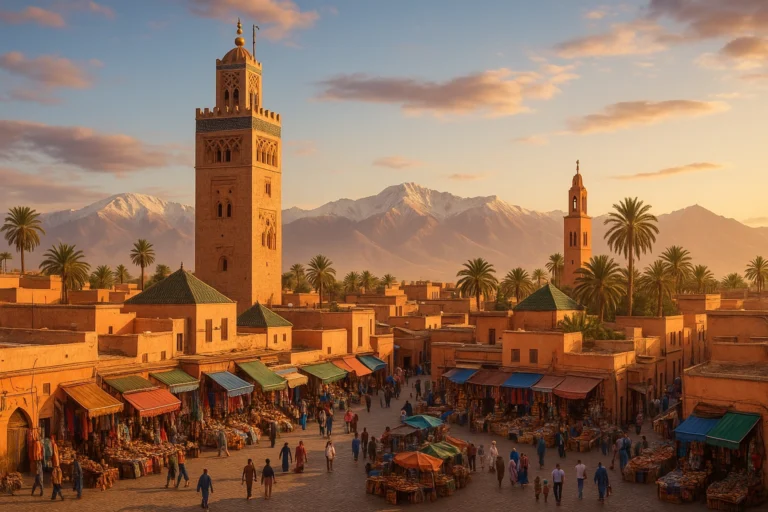 Morocco
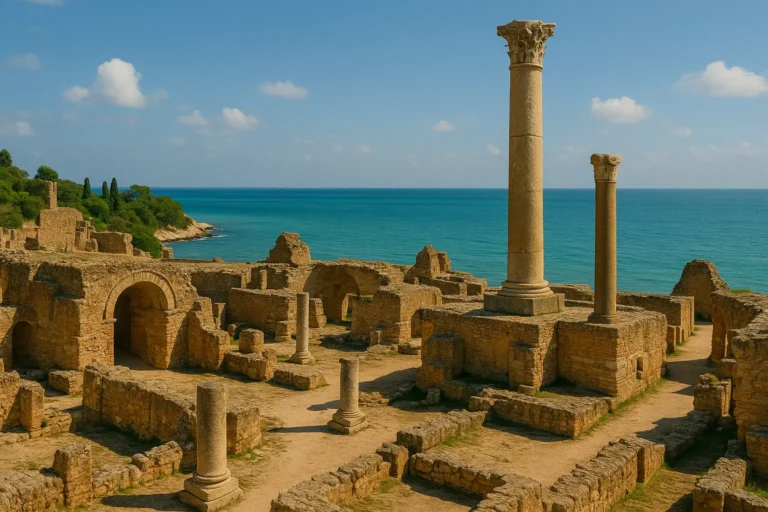 Tunisia
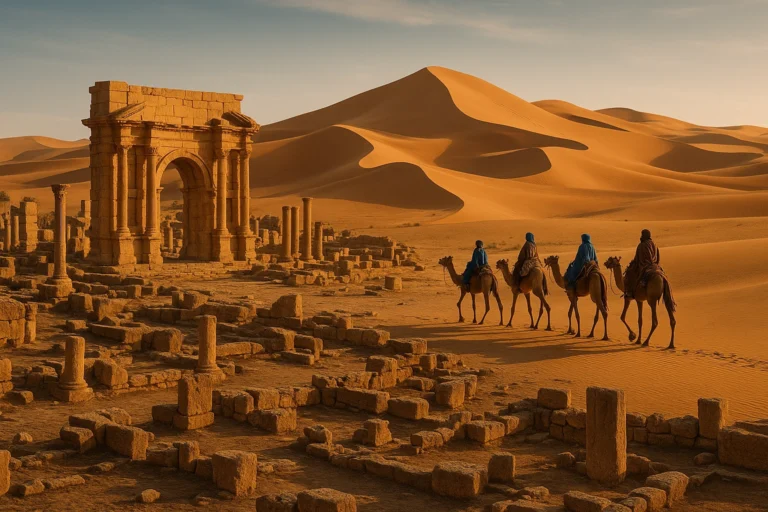 Algeria
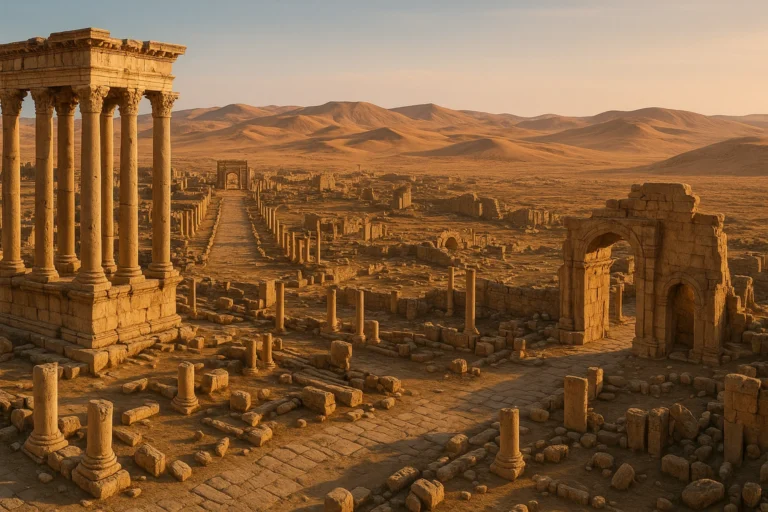 Libya
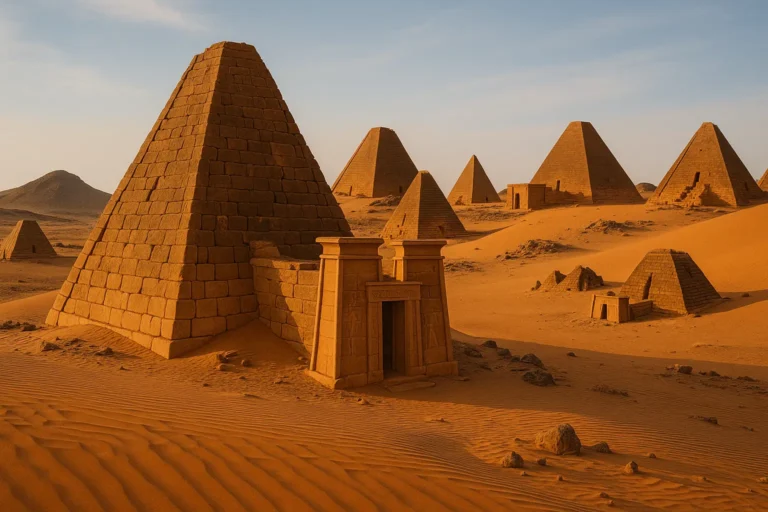 Sudan
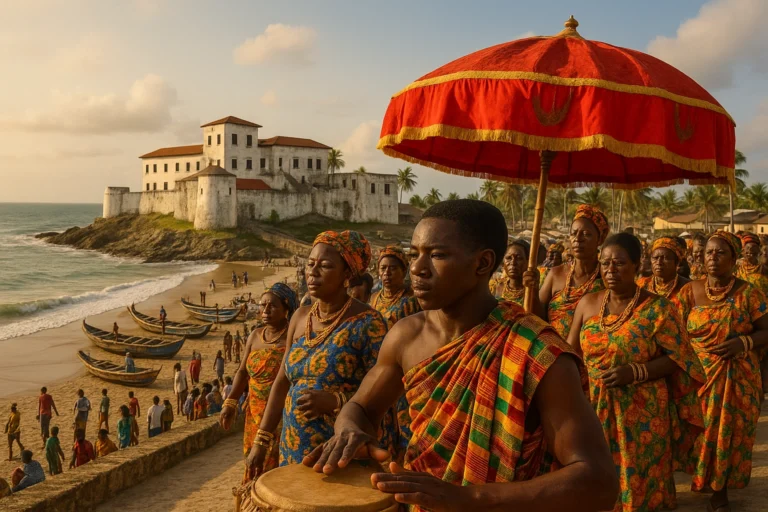 Ghana