Botswana: A Land of Wilderness and Cultural Pride
Botswana is one of Africa’s great conservation success stories. A landlocked country in southern Africa, it shares borders with Zambia and Zimbabwe to the northeast, South Africa to the south and southeast, and Namibia to the west and north. It is a country that has made a deliberate choice to pursue low-volume, high-value tourism, meaning fewer visitors but more carefully protected ecosystems.
That approach has produced extraordinary results. The Okavango Delta, the Chobe River, the Central Kalahari, and the Linyanti wetlands together make up one of the most significant concentrations of wildlife habitat on the continent. Elephant populations in Botswana are among the largest and healthiest in Africa.
Wild dog populations, one of the continent’s most endangered predators, are thriving here. Lions, leopards, cheetahs, hippos, crocodiles, and enormous herds of buffalo and antelope complete a wildlife picture that few places in the world can match.
Why Visit Botswana
Botswana is not a budget destination. The government deliberately keeps visitor numbers low through conservation fees and a licensing system that limits the number of camps and lodges in protected areas. What you get in exchange is access to wilderness areas that feel genuinely remote, game drives where you might not see another vehicle all day, and a standard of guiding and hospitality that is among the best in Africa.
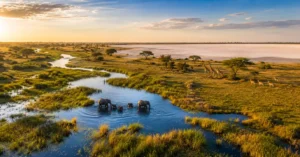
For serious wildlife enthusiasts, Botswana is hard to beat. The combination of ecosystems here is remarkable. The Okavango Delta is a vast inland wetland created by a river that floods into the Kalahari Desert and never reaches the sea. During the annual flood, the delta expands dramatically, concentrating wildlife on islands and attracting predators and prey in enormous numbers. Traveling through it by traditional mokoro canoe is one of the most peaceful and immersive wildlife experiences available anywhere.
Chobe National Park, in the northeast of the country near the town of Kasane, has one of the largest elephant concentrations in Africa. Boat trips on the Chobe River at sunset, with elephants crossing the water and hippos surfacing nearby, are the kind of travel experiences that people describe for years afterward.
Top Places to Visit in Botswana
The Okavango Delta is the centerpiece of most visits to Botswana. It is a UNESCO World Heritage Site and one of the most unique ecosystems on earth. Camps range from mobile tented camps in remote wilderness to more comfortable permanent lodges. The best time to visit depends on what you want to see: the dry season from June to October concentrates wildlife around water sources and is best for game viewing, while the flood peak in July and August makes water-based activities most spectacular.
Chobe National Park offers some of the most accessible and reliably spectacular wildlife viewing in the country. The park is reached easily from Kasane, which has good flight connections, and is often combined with visits to the nearby Victoria Falls in Zimbabwe.
The Central Kalahari Game Reserve is one of the largest protected areas in the world. This is wilderness on a scale that is hard to comprehend. The Kalahari is not a desert in the conventional sense. It receives enough rainfall to support a variety of vegetation and wildlife, including large herds of springbok, gemsbok, and eland, as well as the remarkable black-maned Kalahari lions.
Moremi Game Reserve occupies the eastern portion of the Okavango Delta and is one of the best all-around game reserves in Africa, combining delta ecosystem with more open savanna habitat.
Practical Travel Tips for Botswana
Most visitors fly into Maun, the main gateway to the Okavango Delta, or Kasane for Chobe. Both have good connections from Johannesburg. Most travel within Botswana’s wilderness areas is by small charter aircraft or four-wheel drive vehicle.
The official language is English, which makes communication straightforward. The Botswana pula is the currency. Visas are not required for citizens of most Western countries for stays of up to 90 days. The best time to visit is the dry season from May to October, though the flood season (March to June) has its own appeal.